6 November 2026

The most reliable way to find out whether your car has a timing belt, timing chain or wet timing belt is to check the exact vehicle details, not just the badge on the bonnet. The owner's handbook, manufacturer service information, registration number, VIN and engine code are the best starting points. A quick look under the bonnet can help in some cases, but it can also be misleading because the visible rubber belt is often the auxiliary belt, not the timing belt.
This matters because belts, chains and wet belts have different maintenance requirements. A timing belt may have a manufacturer replacement interval based on age and mileage. A timing chain may not have the same routine interval, but it can still stretch, wear or suffer tensioner problems. A wet belt is a type of belt that runs inside engine oil, so correct oil specification and service history become especially important.
If you are checking because you have bought a used car, lost service records or noticed an engine noise, avoid guessing. The same model name can use different engine designs depending on year, fuel type, engine code, power output and production period. If timing-system failure has already caused serious engine damage, Motor Fix Way can help UK motorists compare replacement-engine quotations from relevant suppliers, subject to exact compatibility checks.
A timing belt, also called a cambelt, is a toothed rubber belt that synchronises the movement of the crankshaft and camshaft. In simple terms, it helps the pistons and valves move at the right time. If that timing is lost, the engine may stop running and, on some engines, internal damage can occur.
A timing chain performs the same basic job, but it is made from metal links rather than rubber. It normally runs inside the engine and is lubricated by engine oil. Chains are often thought of as longer-lasting than belts, but they are not magic. They can stretch, guides can wear and tensioners can fail, particularly where oil servicing has been neglected or the engine has a known issue.
A wet timing belt sits somewhere between the two in terms of how owners tend to understand it. It is still a belt, but unlike a conventional dry belt, it operates inside the engine oil. That means it usually cannot be identified by simply lifting the bonnet and looking around. Wet-belt engines need the correct oil grade and servicing because the belt material is designed to work in a specific oil environment.
The best check is a vehicle-specific one. Do not rely on a forum post that says a particular model has a chain, because another engine in the same range may use a belt. A small petrol, a larger diesel and a later facelift model can all differ.
The handbook may not always say in plain words, "your car has a timing belt". Instead, it may list a camshaft drive belt replacement interval. That is a strong clue, but if you are unsure, confirm it with manufacturer service information or a professional repairer.
The engine code is often the key to getting the right answer. It may appear on vehicle documentation, service invoices, manufacturer records or an engine identification label. In some cases, a garage may need to confirm it using diagnostic or workshop information.
This is especially important when buying parts or comparing repair options. A 1.6 diesel, for example, is not automatically the same as every other 1.6 diesel fitted to that manufacturer's cars. Emissions equipment, ancillaries, ECU configuration and production changes can affect compatibility. If you are not sure what engine your vehicle has, this related guide on how to find your engine code explains the checks in more detail.
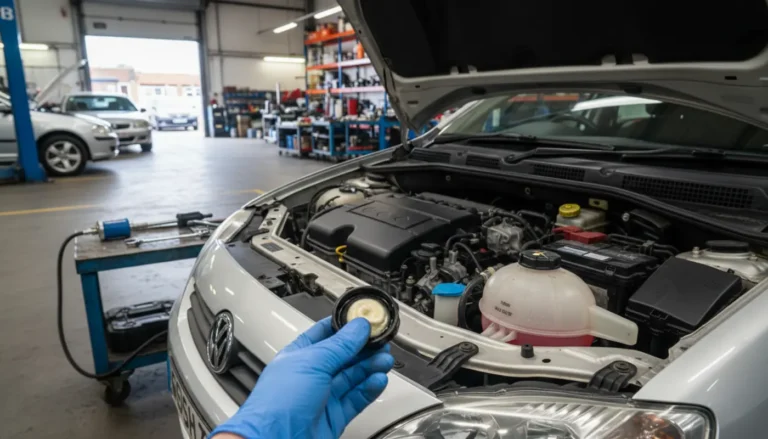
Sometimes you can gather clues, but you cannot always confirm the timing system by sight. A conventional dry timing belt is usually fitted at one end of the engine behind a protective cover. A timing chain is generally enclosed inside the engine. A wet belt is also enclosed, because it runs in oil.
The common trap is confusing the auxiliary belt with the timing belt. The auxiliary belt, sometimes called a serpentine belt, often drives components such as the alternator, air-conditioning compressor or power-steering pump, depending on the vehicle. It is usually visible, made from rubber and located around pulleys, so it is easy to mistake for the timing belt. Seeing a rubber belt does not prove the engine has an external cambelt.
Do not remove timing covers unless you have the right tools, technical information and competence. Running an engine with exposed timing components is unsafe and can cause serious damage if something is disturbed. Even where a belt can be inspected, visual condition alone cannot reliably confirm how long it will last.
No, an MOT is not a full mechanical service and it does not confirm that the timing belt, timing chain or wet belt is in good condition. A car can pass an MOT while still being overdue for scheduled timing-belt replacement. GOV.UK explains the scope of car parts checked at an MOT, and motorists should treat servicing requirements separately from the MOT test.
For timing belts in particular, the manufacturer's service schedule is the important reference. Replacement may be based on mileage, age or whichever comes first. Age matters because rubber components can deteriorate even on cars that cover low annual mileage. If your car has no evidence of a belt change and it is approaching or past the manufacturer interval, it is sensible to budget for the work rather than hope for the best.
A timing-belt service often involves more than just the belt itself. Depending on the engine and manufacturer procedure, the job may include tensioners, idlers and sometimes the water pump if it is driven by the belt. Always ask what is included in the quotation, because a cheap price may not cover the same parts or labour as a more complete job.
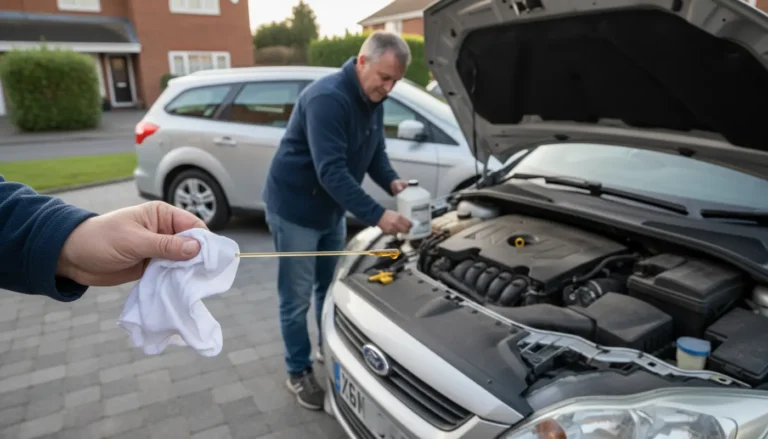
Timing chains depend heavily on clean oil at the correct specification. Poor lubrication can accelerate wear to the chain, guides and tensioner. If you hear rattling on start-up, notice rough running or see an engine-management warning light, do not assume it is definitely the chain, but do have it checked promptly.
Wet belts need particular care because they operate in engine oil. The wrong oil, missed oil changes or contamination may affect belt condition on some engines. If your vehicle uses a wet belt, ask the garage to confirm the correct oil specification and whether the engine has any inspection or replacement requirements beyond a normal oil service.
Timing-system faults can create noticeable symptoms, but those symptoms are not unique. Misfiring, poor starting and warning lights can also be caused by ignition, fuelling, sensors, compression problems, oil pressure issues or other engine faults. A proper diagnosis is always better than replacing expensive parts on suspicion.
If there is severe rattling, sudden loss of power, an oil-pressure warning or a suspected timing failure, stop driving as soon as it is safe. Continuing to run the engine can make damage worse. It is better to arrange recovery than to turn a repairable problem into a much larger one.
If the timing system fails, the engine may stop immediately. On some engines, valves and pistons can make contact, causing bent valves, damaged pistons or cylinder-head damage. On others, the consequences may be different. The outcome depends on the engine design, speed, failure circumstances and how quickly the vehicle was stopped.
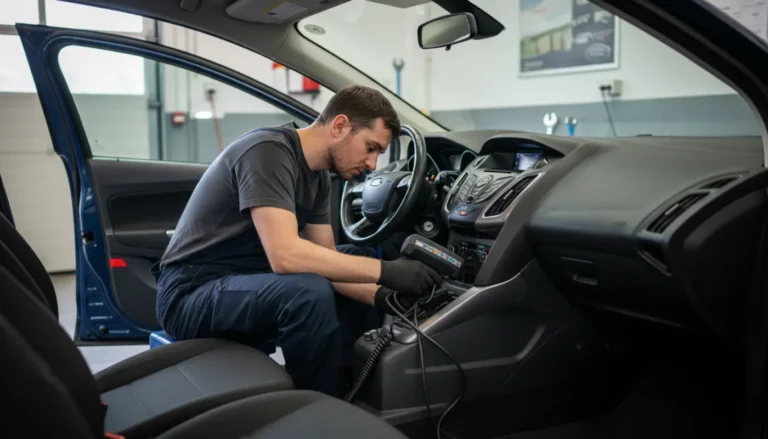
A garage may carry out fault-code checks, compression testing, leak-down testing, borescope inspection, oil and coolant checks or cylinder-head assessment before recommending the next step. Timing failure does not automatically mean the whole engine must be replaced. In some cases, repairing the original engine may be viable. In others, especially where internal damage is extensive, sourcing a compatible replacement engine may make more financial sense.
If replacement is being considered, compatibility must be checked carefully using the registration, VIN, engine code, fuel type, production year, emissions equipment and ancillary configuration. A used or reconditioned engine should not be bought simply because it appears to be the same size. Motorists comparing options after confirmed timing-related damage can request vehicle-specific supplier quotations for used replacement car engines or consider reconditioned engine options, depending on availability, budget and supplier terms.
Whether you are booking a timing-belt replacement, investigating a chain rattle or comparing replacement-engine options, the right questions can prevent confusion later. Ask for clear written information rather than relying only on a quick phone conversation.
Keep invoices and service records after any timing-system work. They help future garages, support resale value and remove guesswork for the next owner. A neatly filed invoice may not be glamorous, but it is far more useful than saying, "I think the previous owner said it was done."
The biggest mistake is assuming that one answer applies to every version of a car. Manufacturers change engine designs over time, and a model range can include several engines with different timing arrangements. Always confirm using the exact vehicle details.
Another common mistake is treating a timing chain as maintenance-free. It may not have a routine belt-style replacement interval, but it still relies on the correct oil and healthy tensioning components. Ignoring chain noise because "chains last forever" can become expensive.
Finally, do not let a passed MOT give false confidence about timing maintenance. The MOT checks roadworthiness items, not whether a cambelt is overdue or whether a chain tensioner is wearing. Timing-system care belongs in the service schedule, not the MOT certificate.
How can I find out if my car has a timing belt or chain?
Check the owner's handbook and manufacturer service schedule, then confirm using the registration number, VIN or engine code. If records are unclear, a qualified garage or authorised dealer can verify it.
Is the visible belt under my bonnet the timing belt?
Not necessarily. The visible rubber belt is often the auxiliary belt, while the timing belt may be behind a cover and a chain or wet belt is usually enclosed inside the engine.
Do timing chains last forever?
No. Timing chains can last a long time, but they can stretch or suffer guide and tensioner wear, especially if oil servicing has been poor or delayed.
Does a wet belt need different maintenance?
Yes. A wet belt runs in engine oil, so the correct oil specification and service intervals are particularly important. Any inspection or replacement requirement should come from the manufacturer's information for that exact engine.
Does a broken timing belt always mean I need a replacement engine?
No. The engine needs professional assessment first. Depending on the damage, repair may be possible, while a replacement engine may only be considered if repair is uneconomical or impractical.