6 November 2026
The first signs of a blown head gasket are often subtle: unexplained coolant loss, a temperature gauge creeping higher than usual, persistent white exhaust vapour after the engine has warmed up, rough starting, misfires, loss of power, or creamy contamination in the oil. None of these signs proves the head gasket has failed on its own, but they are strong enough warning clues to take seriously.
A head gasket problem is one of those faults that can start quietly and then become expensive if the car keeps being driven while overheating or losing coolant. The tricky part is that many symptoms overlap with other faults, such as a failed thermostat, split coolant hose, water pump issue, radiator leak or ignition problem. That is why proper testing matters before committing to a major repair.
If your car is overheating, stop safely and let the engine cool naturally. Do not remove the coolant filler cap while the engine is hot, as the cooling system can be pressurised and may release scalding coolant. Official advice in The Highway Code vehicle maintenance guidance also stresses the importance of allowing an overheated engine to cool before touching the cooling system.
The head gasket sits between the cylinder head and the engine block. Its job is to seal combustion pressure inside the cylinders while keeping engine oil and coolant in their own separate passages. In simple terms, it helps stop high-pressure gases, oil and coolant from going where they should not.
When the gasket fails, the symptoms depend on where the failure occurs. Coolant can leak into a cylinder and create white exhaust vapour. Combustion gases can enter the cooling system and cause overheating or bubbling in the expansion tank. Coolant can mix with engine oil and reduce lubrication. A cylinder can lose compression, leading to rough running or poor starting. For a clearer technical explanation, Motor Fix Way has a helpful article on what a head gasket is and how it works.
The earliest symptoms are not always dramatic. Many drivers expect clouds of smoke and a dashboard full of warning lights, but a developing head gasket fault may begin with small changes that are easy to dismiss.
These are warning signs, not a final diagnosis. A car can lose coolant from a hose, radiator, water pump, expansion tank or heater matrix. White smoke can sometimes be normal condensation on a cold morning. Rough running can be caused by ignition, fuelling, injector or sensor faults. The aim is not to panic, but to act before the engine cooks itself like a Sunday roast left in too long.
Coolant loss is one of the most common early clues. If you keep topping up the coolant and cannot see a puddle under the car, the coolant may be escaping internally, although external leaks can also evaporate on hot engine parts and leave little evidence on the ground.
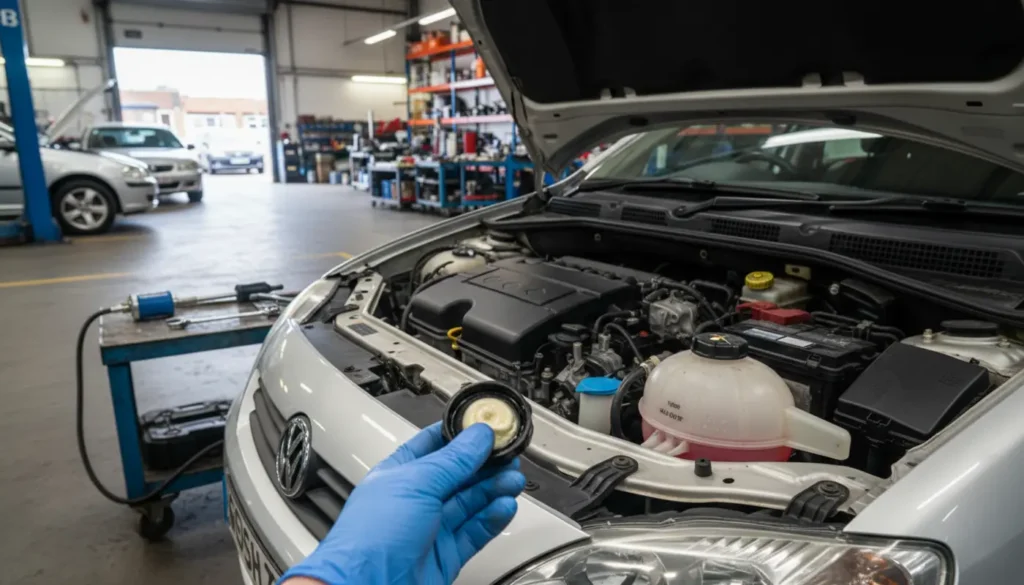
Only check coolant level when the engine is cold. If the coolant drops again after topping up, book an inspection rather than relying on repeated top-ups. Low coolant can quickly lead to overheating, and overheating can make a small head gasket problem much worse.
Overheating can be both a cause and a symptom of head gasket failure. A previous overheating event may have damaged the gasket, warped the cylinder head or weakened the seal. Alternatively, combustion gases entering the cooling system can disrupt coolant flow and cause the temperature to rise.
If the temperature warning light comes on or the gauge enters the red, stop when it is safe. Continuing to drive can damage the cylinder head, engine block, pistons, bearings and catalytic converter. Even if the head gasket was repairable at first, severe overheating can turn a gasket job into a far bigger engine repair.
White vapour from the exhaust is not always bad news. On cold mornings, condensation in the exhaust can create steam for a few minutes after start-up. That should reduce as the engine and exhaust warm up.
Persistent dense white smoke after the car reaches normal operating temperature is more concerning, especially if it has a sweet smell and the coolant level is dropping. This can indicate coolant being drawn into the cylinder, heated during combustion and leaving the exhaust as persistent white vapour. It still needs testing, as smoke colour and smell alone are not enough to confirm the fault.
A small internal leak can let coolant enter a cylinder while the engine is switched off. When you next start the car, that cylinder may misfire until the coolant clears. This can show up as a lumpy idle, hesitation, poor starting or an engine management light.
Misfires have many possible causes, including spark plugs, coil packs, injectors, compression loss and sensor faults. If the engine management light is on, fault codes can provide useful clues, although codes rarely say “head gasket” directly.
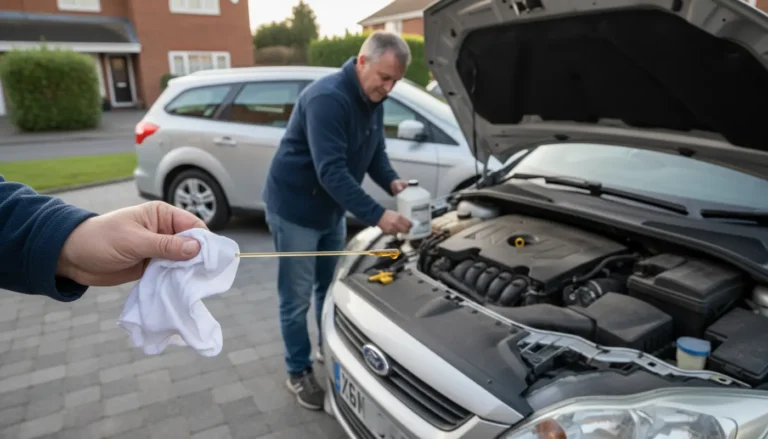
Coolant mixing with engine oil can create a pale, creamy, mayonnaise-like substance on the dipstick, inside the oil filler cap or in the rocker cover area. This is a serious sign because contaminated oil may not lubricate the engine properly.
However, context matters. A small amount of cream under the oil cap can also occur when a car is used mainly for short journeys, because condensation does not fully evaporate. If the dipstick oil looks milky, the oil level rises unexpectedly, the coolant is dropping or the engine is overheating, stop using the car and arrange professional assessment.
Yes, a head gasket can fail without clouds of white smoke. Some failures occur between a coolant passage and the outside of the engine, causing an external leak. Others allow combustion gases into the cooling system but do not immediately put much coolant into the cylinder. Some reduce compression between cylinders, causing misfires and poor performance rather than smoke.
This is why the absence of milky oil or white exhaust smoke does not prove the gasket is healthy. Equally, one visible symptom should not be treated as a guaranteed diagnosis. The failure route matters, and so does the condition of the cooling system, cylinder head and engine block.
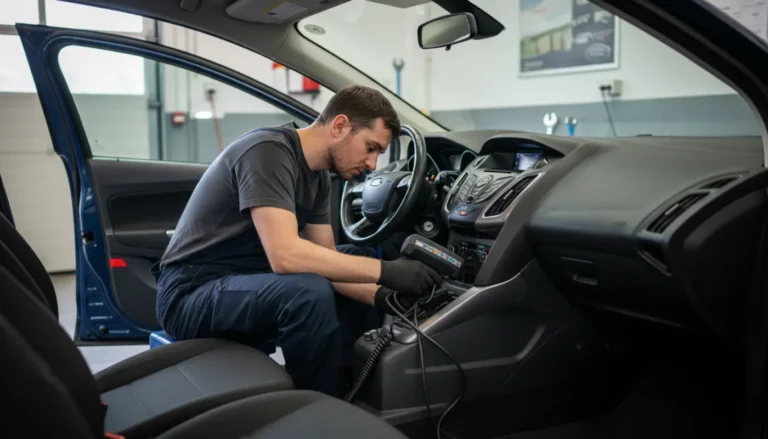
A garage will usually start with an inspection of the coolant level, oil condition, visible leaks, warning lights and driving symptoms. They may look for coolant staining, pressure build-up in the expansion tank, exhaust vapour, oil contamination and signs of previous overheating.
Common diagnostic tests include a cooling system pressure test, combustion gas test, compression test and leak-down test. A combustion gas test checks whether exhaust gases are present in the coolant, which can be strong evidence of leakage between a cylinder and the cooling system. A compression test compares cylinder pressure, while a leak-down test helps identify where pressure is escaping.
No single test is perfect in every situation. A negative combustion gas test, for example, may not rule out every type of gasket failure. If the engine is dismantled, the garage can inspect the gasket, check the cylinder head for warping or cracks, and assess whether machining or further work is required.
A confirmed blown head gasket does not automatically mean the entire engine must be replaced. Repair may be sensible if the damage is limited, the cylinder head and block are within tolerance, and the rest of the engine is in good condition. The work may involve removing the cylinder head, replacing the gasket and bolts, checking the head, changing oil and coolant, and renewing related parts where needed.
Engine replacement may be considered if overheating has caused serious damage, the cylinder head or block is cracked, the bottom end has suffered, or the cost of repair is no longer proportionate to the vehicle's value. This is especially relevant on older or high-mileage cars, where a large repair bill may not be the best long-term option.
If replacement becomes the practical route, compare replacement engine options carefully, including used and reconditioned units. A used engine is usually removed from another vehicle, and its mileage evidence, test history, included components and warranty terms can vary. A reconditioned engine may have had parts inspected, machined or replaced, but the scope of reconditioning is supplier specific. Through Motor Fix Way, drivers can compare supplier quotations for suitable replacement engine options, including details such as availability, warranty terms and whether supply-only or supplier-arranged fitting is offered.
If you are considering a replacement engine, do not buy purely by make, model or engine size. Two vehicles that look similar can have different engine codes, emissions equipment, power outputs, sensors, ancillaries or gearbox compatibility. A 2.0 diesel in one model year may not be a direct match for another.
Suppliers may ask for the registration number, VIN, exact make and model, production year, fuel type, engine capacity, power output, transmission type and engine code. The engine code is particularly important because it helps identify the correct unit and avoid costly mismatch problems. If you are unsure where to find it, see the guide on finding your car's engine code.
Ask what is included with the replacement engine. Some units are supplied bare, while others may include certain ancillaries. Items such as turbochargers, injectors, alternators, manifolds, sensors and flywheels may or may not be included, and warranty cover can depend on correct fitting, fresh fluids, replacement filters and resolving the original cause of overheating.
Whether you are authorising a head gasket repair or comparing replacement engine quotes, a clear written breakdown helps prevent confusion. Price is important, but it should not be the only factor.
A sensible quotation should separate diagnosis, parts, machining, labour, fluids, delivery and any additional cooling system repairs. Be cautious with headline prices that do not explain what is included. The cheapest option is not always the cheapest by the time missing parts, fitting requirements and warranty exclusions are considered.
The biggest mistake is continuing to drive while the engine is overheating. A short journey can quickly become an expensive one if the temperature climbs and the car loses coolant. The second mistake is opening the coolant cap while hot, which can be dangerous.
Other common errors include assuming white smoke always means head gasket failure, treating creamy residue under the oil cap as conclusive proof, using sealant as a guaranteed fix, or replacing the engine without finding out why it overheated in the first place. If the original cooling fault remains, a replacement engine could suffer the same fate.
An MOT pass should not be treated as proof that the head gasket or engine is healthy. The MOT checks specific roadworthiness items at the time of the test. It is not a full mechanical health assessment, and a developing internal engine fault may not be obvious during the inspection.
What is usually the first sign of a blown head gasket?
There is no universal first sign, but repeated coolant loss, overheating, rough cold starting and persistent white exhaust vapour are common early warnings.
Is white smoke always a blown head gasket?
No. Brief white vapour on a cold day can be normal condensation, but thick white smoke after warm-up, especially with coolant loss, should be checked professionally.
Can I drive with a suspected blown head gasket?
It is best to avoid unnecessary driving, particularly if the engine is overheating or losing coolant. Stop safely and arrange diagnosis before further damage occurs.
Can a blown head gasket be repaired?
Often it can, provided the cylinder head, block and wider engine remain serviceable. Severe overheating or internal damage may make replacement more sensible.
Does a replacement engine need the same engine code?
Compatibility should always be checked using the exact vehicle details, and the engine code is often essential. Similar engine size or model name does not guarantee a correct match.