16 November 2026
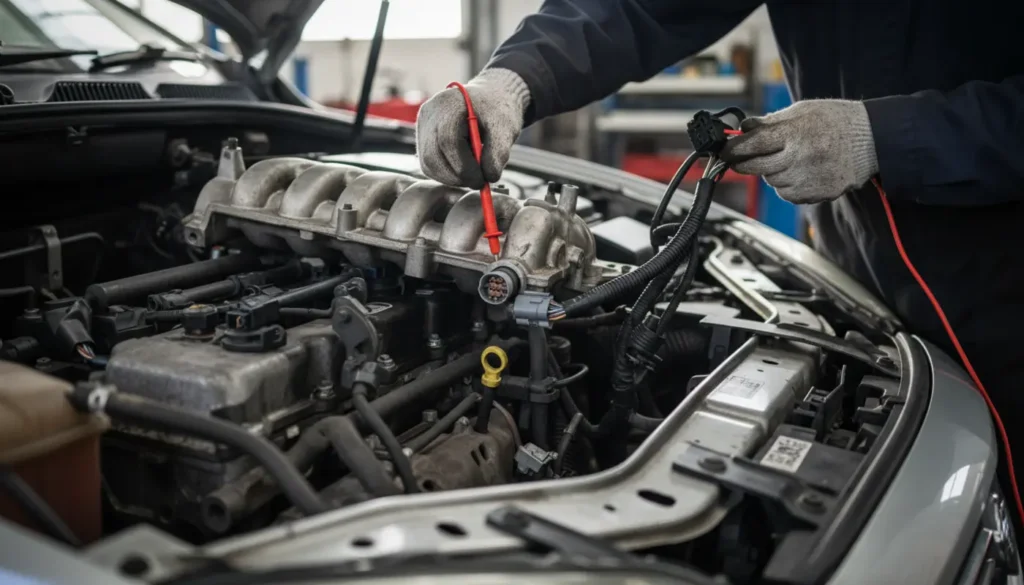
An engine knock sensor is a small but important sensor that detects the vibration caused by abnormal combustion inside the engine. When it recognises knock, often called pinking or detonation, it sends a signal to the engine control unit, or ECU, so the ECU can adjust ignition timing and help protect the engine.
A knock sensor fault does not automatically mean the engine is damaged, and it certainly does not mean a replacement engine is the next step. In many cases, the issue may be a failed sensor, a damaged connector, a wiring fault or a problem elsewhere in the engine management system.
That said, a genuine metallic knocking noise should never be ignored. If the engine is loudly knocking, overheating, misfiring badly or showing an oil pressure warning, avoid driving any further unless it is necessary to move the car to a safe place, and arrange professional diagnosis or recovery. For motorists comparing wider repair options after a serious engine diagnosis, Motor Fix Way can help UK drivers compare quotations from relevant replacement engine suppliers where appropriate.
The knock sensor monitors vibration through the engine block or crankcase. It is not really listening in the way a microphone listens to sound inside the cabin. Instead, it detects structure-borne vibration caused by combustion activity inside the cylinders.
In a petrol engine, the air and fuel mixture should burn in a controlled way after the spark plug fires. If the mixture self-ignites too early or burns in an uncontrolled pattern, sharp pressure waves can be produced. These pressure waves create high-frequency vibration, which the knock sensor is designed to recognise.
The sensor helps the ECU keep the engine running close to an efficient ignition setting without allowing harmful knock to continue. In simple terms, it gives the engine management system a warning that combustion is not quite behaving itself. A bit like a polite tap on the shoulder, but from a component bolted to a hot engine block.
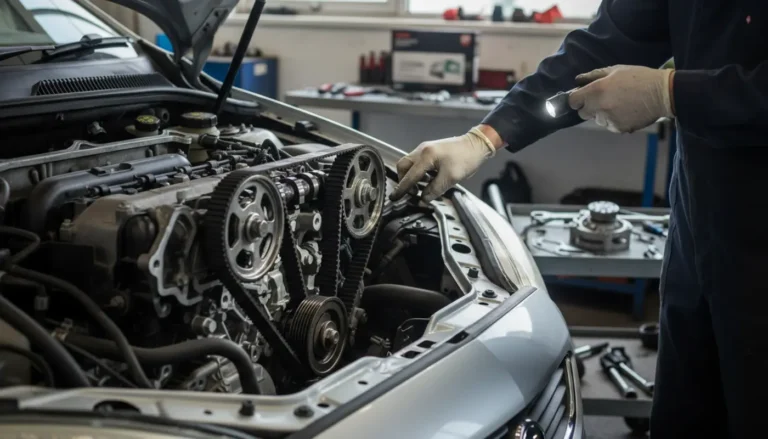
A knock sensor is usually fitted directly to the engine block or crankcase, where it can pick up vibration clearly. The exact position depends on the engine design. Some engines have one sensor, while others may have more than one, especially V-shaped engines or engines with separate banks of cylinders.
Access can vary greatly. On some vehicles, the sensor is reasonably visible. On others, it may sit under the inlet manifold or behind other components, making replacement more labour-intensive. That is why a garage should use the manufacturer's repair information rather than relying on a generic location or a quick guess from a forum.
Correct mounting matters. If the sensor is loose, overtightened, fitted with dirt or corrosion behind it, or installed using the wrong fixing method, it may not read vibration accurately. A simple fitting error can look very much like an electronic fault.
Most knock sensors use a piezoelectric element. Piezoelectric sounds complicated, but the idea is straightforward: when the element is stressed by vibration, it generates a small electrical signal. The ECU is interested less in general vibration strength and more in patterns or frequency ranges that are associated with combustion knock.
Retarding ignition timing means the spark happens slightly later. This can reduce knock because it changes when peak cylinder pressure occurs. Once conditions improve, the ECU may gradually advance the timing again. However, ignition adjustment is not a magic cure for every problem. If the engine is running too hot, too lean, using unsuitable fuel, suffering from carbon build-up or experiencing internal damage, the underlying cause still needs attention.
Engine knock is often described by drivers as pinking, pinging, rattling or a metallic noise under acceleration. It is usually most noticeable when the engine is under load, such as climbing a hill, accelerating from low revs or towing.
Detonation and pre-ignition are related but not identical. Detonation is abnormal combustion after the spark event, where the mixture burns too violently or in multiple flame fronts. Pre-ignition means the mixture starts burning before the intended spark, often due to a hot spot in the combustion chamber. Both can be damaging if severe or sustained.
It is also important to separate combustion knock from other mechanical noises. Injector ticking, valve gear noise, exhaust heat shield rattles, worn engine mounts and bottom-end bearing knock can all be described by owners as knocking. A knock sensor fault code and a knocking noise are not the same diagnosis. If you want a deeper explanation of engine noises and possible causes, see what engine knocking can mean.
A faulty knock sensor can affect how the engine performs, but symptoms vary depending on the vehicle, the ECU strategy and the type of fault. Some cars go into a cautious back-up mode, while others may feel nearly normal but store a diagnostic trouble code.
Common codes can point in different directions. P0325 is often used for a general knock sensor circuit fault, P0326 may suggest a range or performance issue, P0327 can indicate a low input signal, and P0328 can indicate a high input signal. The exact meaning and test procedure depend on the manufacturer and engine management system.
If the engine management light is on, it helps to understand what the warning is telling you and what it is not telling you. A warning lamp is a starting point for diagnosis, not a complete answer.
A knock sensor can fail internally, but many apparent sensor faults are actually caused by something around it. Heat, vibration, water ingress and age can all affect the sensor, connector or wiring. Corroded terminals, broken wires, short circuits and poor contact are common areas to check before replacing parts.
Mounting problems are another overlooked cause. The sensor must usually be tightened to the correct manufacturer-specified torque. Too loose and it may not detect vibration properly. Too tight and it may be damaged or give inaccurate readings. Replacement should not be treated like fitting a random bolt from the biscuit tin.
There are also genuine engine causes of knock. These can include an air-fuel mixture that is too lean, excessive engine temperature, unsuitable fuel, carbon deposits, boost control issues on turbocharged engines, ignition faults or internal engine wear. The knock sensor may simply be reporting what is happening rather than causing it.
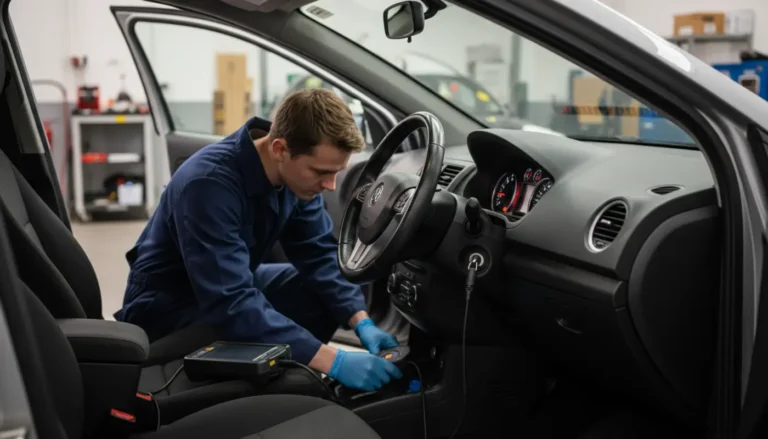
Good diagnosis starts with a scan tool, but it should not end there. A stored code gives the technician a clue about the circuit, signal or operating condition, not proof that one component must be replaced immediately.
A sensible diagnostic process may include checking stored and pending fault codes, inspecting the wiring and connector, looking for corrosion or damage, confirming the sensor is correctly mounted, and testing the circuit according to the manufacturer's service data. Resistance values, voltage patterns and test conditions are vehicle-specific, so universal figures should be treated with caution.
On more involved faults, a technician may use an oscilloscope to view the sensor signal under controlled conditions. This can help distinguish between a dead sensor, wiring issue, ECU problem or genuine knock event. Testing around a running engine should be carried out by someone suitably qualified, especially where moving belts, hot exhaust components and high-voltage ignition systems are nearby.
Vehicle identification is also important when parts are being quoted. Registration number, VIN, production year, fuel type, engine size, engine code and original equipment part reference can all matter. If you are unsure how to identify the engine fitted to your vehicle, check the vehicle handbook, service records or manufacturer part information before ordering parts.
Whether it is sensible to drive depends on the symptoms. If the car feels normal and only has a warning light, you may be able to drive carefully to a garage, but you should not ignore the fault or keep using the vehicle indefinitely without diagnosis.
If there is severe metallic knocking, heavy misfiring, overheating, smoke, major power loss or an oil pressure warning, avoid driving and seek assistance. Continuing to drive with genuine abnormal combustion or internal engine noise can increase the risk of more expensive damage.
A faulty knock control system can also affect fuel consumption and emissions because the ECU may use a conservative ignition strategy. This may make the car feel flat or hesitant, particularly under load.
The knock sensor itself is not normally assessed as a stand-alone MOT component. However, the engine malfunction indicator lamp, often called the engine management light, is part of the MOT inspection for applicable vehicles, and emissions are assessed according to the vehicle's age, fuel type and test requirements.
The Driver and Vehicle Standards Agency sets out the relevant inspection requirements in the MOT inspection manual for cars and passenger vehicles. A warning light does not automatically tell you the exact repair needed, but unresolved engine management faults should be dealt with before an MOT where possible.
Passing an MOT also does not prove the knock control system is perfect in every driving condition. The MOT is a statutory roadworthiness and emissions test, not a full engine diagnostic session.
In most cases, a knock sensor fault is investigated at component and circuit level first. That may mean replacing the sensor, repairing wiring, cleaning or replacing a connector, correcting a mounting issue, or addressing fuelling, cooling or ignition faults.
A replacement engine should not be recommended on the basis of a knock sensor code alone. Wider engine investigation may be needed if there is persistent heavy knocking, low oil pressure, compression loss, overheating, piston damage, bearing noise or severe loss of power. At that point, the decision may become whether internal repair, a used engine, a reconditioned engine or another route makes financial sense.
When comparing quotations, ask whether the price covers diagnosis, the sensor itself, fitting, VAT, code clearing, road testing and warranty terms. Also check whether any warranty includes labour or only the supplied part. Compatibility should be confirmed using the exact vehicle details, not just the make and model.
You cannot prevent every sensor or wiring fault, but good maintenance helps reduce the risk of genuine knock and makes faults easier to diagnose. Follow the manufacturer's service schedule, use the correct engine oil and fuel specification, and investigate overheating, misfires or poor running promptly.
Avoid assuming premium fuel will cure every knock-related issue. It may help some engines designed for higher-octane fuel, but it will not repair damaged wiring, a failed sensor, a cooling fault or internal mechanical wear. Likewise, clearing a fault code without fixing the cause is usually a short holiday for the warning light rather than a repair.
Is a knock sensor the same as a crankshaft sensor?
No. A knock sensor detects combustion-related vibration, while a crankshaft position sensor monitors crankshaft speed and position so the ECU can manage timing and injection accurately.
Does a bad knock sensor make the engine knock?
The sensor itself does not usually create a mechanical knocking noise. A failed sensor may stop the ECU controlling genuine knock properly, but the noise could also come from another engine or exhaust fault.
Will replacing the knock sensor clear the engine warning light?
It may do if the sensor was the true cause, but the code may need clearing with diagnostic equipment. If wiring, mounting or genuine combustion problems remain, the warning light can return.
Are knock sensors interchangeable between vehicles?
Not safely by assumption. Connector design, calibration, mounting, frequency response and engine management requirements can differ, so compatibility should be checked using the VIN, engine code or manufacturer part data.
Should I replace my engine because of a knock sensor code?
No, not from a code alone. Sensor, wiring, ECU signal and genuine combustion causes should be diagnosed first, with engine replacement considered only if serious internal damage is confirmed.