6 November 2026
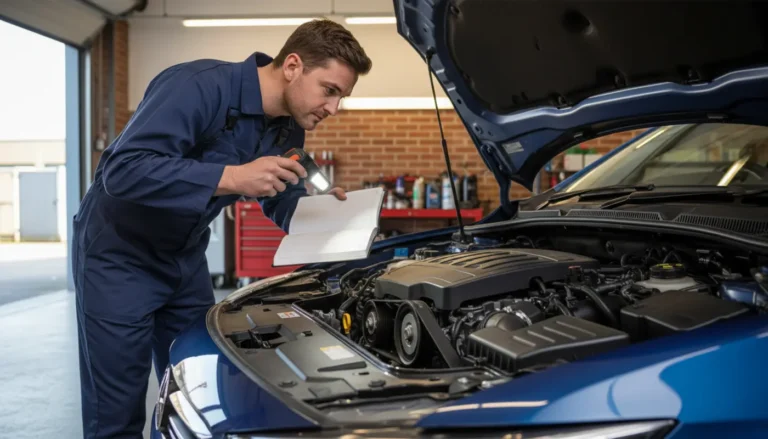
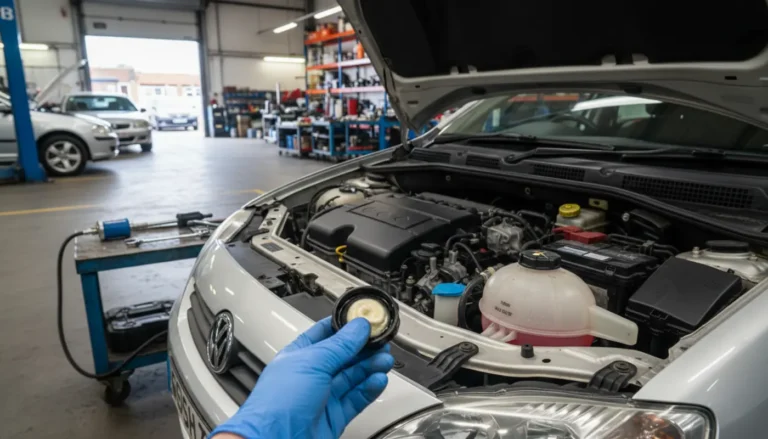
You can check engine light codes yourself with a compatible OBD or EOBD scanner, but the code is only the start of the diagnosis. It tells you which monitored system has reported a problem, not which part definitely needs replacing. The safest approach is to read the warning properly, record every code, keep the freeze-frame data if available, then investigate the fault before clearing anything.
In the UK, the engine management light is often called the MIL, EML or check engine light. It may relate to emissions, fuelling, ignition, sensors, engine control, transmission control or communication between vehicle modules. A simple reader can be very useful, but it will not turn every driver into a master technician overnight, which is probably for the best.
If a scan eventually points towards serious engine or gearbox damage, get the fault confirmed before spending money on major parts. Once a proper diagnosis has shown that repair is uneconomical, Motor Fix Way can help UK motorists compare replacement engine and gearbox quotations from relevant suppliers, including used engine options and used gearbox options where available.
An engine light code, properly called a Diagnostic Trouble Code or DTC, is a stored fault reference from the vehicle's onboard diagnostic system. Most codes appear as a letter followed by four numbers, such as P0301 or P0420. The first letter gives a broad clue about the system involved.
The important point is that a code is not a confirmed parts order. A misfire code could be caused by an ignition coil, spark plug, injector, compression issue, air leak, wiring fault or control problem. A catalyst efficiency code could involve the catalyst, oxygen sensors, exhaust leaks or an underlying fuelling fault. Replacing the named component without testing can become expensive very quickly.
A steady amber engine light often means the vehicle has detected a fault that needs prompt attention. Check the handbook first, because manufacturers use warning lights differently. If the vehicle drives normally, has no smoke, no overheating, no unusual noises and no loss of power, it may be possible to drive gently to a safe place or to a garage, but do not ignore it.
A flashing engine light is more urgent. So are symptoms such as severe misfiring, strong fuel smells, overheating, oil pressure warnings, smoke, knocking noises or major loss of power. In those situations, stop somewhere safe, switch off and seek assistance. Continuing to drive can turn a manageable fault into catalytic converter damage, engine damage or a roadside recovery episode you definitely did not plan.
UK road-safety guidance also reminds drivers not to ignore warning displays or signs of potentially dangerous faults. The official Highway Code vehicle maintenance guidance is a useful reference if you are unsure how seriously to treat a warning light.
Before plugging anything into the car, gather a few basics. You need a compatible OBD or EOBD scanner, the vehicle handbook, a phone or notebook for recording information, and a safe, stationary place to work. The car should be parked securely, ideally with good lighting and ventilation.
Make a note of the registration, make, model, year, fuel type, engine size and transmission type. If you later need a professional diagnosis or replacement quotation, the VIN, engine code and gearbox code may also be needed. Similar model names do not guarantee the same engine, gearbox, wiring, ECU or emissions equipment.
Do not connect or use a scanner while driving. Avoid hot exhausts, moving belts, fans and any high-voltage hybrid components. Hybrid and electric high-voltage systems should only be accessed by trained people with suitable equipment.
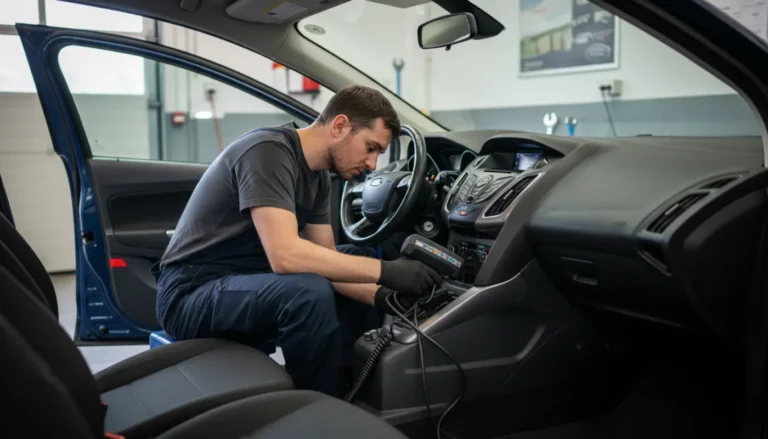
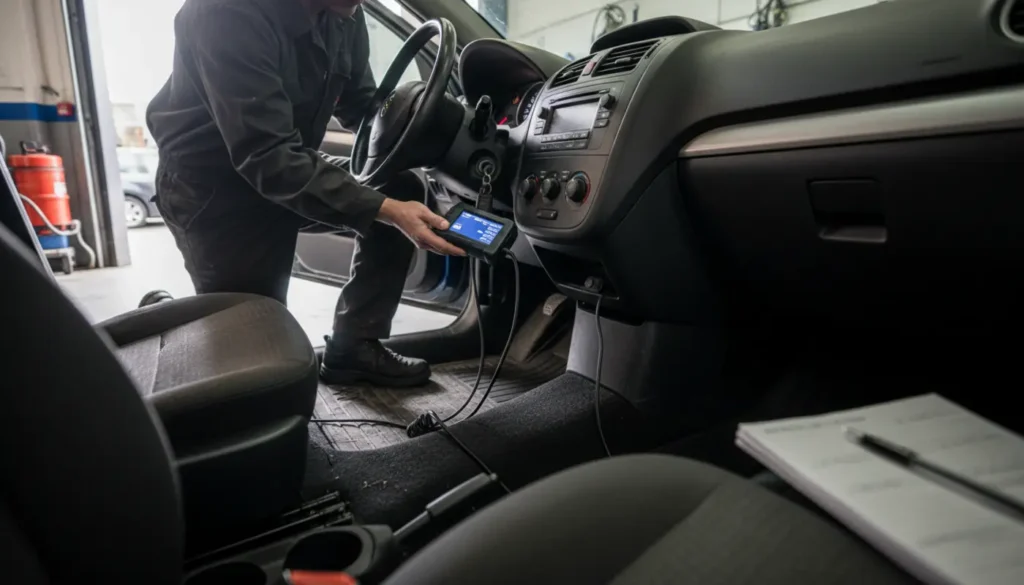
The OBD socket, also called the Data Link Connector or DLC, is usually a 16-pin connector. It is commonly found under the dashboard near the driver's footwell, around the steering column, behind a small trim cover or near the centre console. However, the exact location varies by make and model.
If you cannot see it, check the handbook rather than pulling at random trim panels. Do not force the scanner plug into any connector. It should fit squarely and without much pressure. A damaged diagnostic socket can create a new problem while you are trying to solve the original one.
The exact sequence can vary slightly depending on the scanner, so always follow the tool manufacturer's instructions. For most basic code readers, the process is straightforward.
A stored code means the vehicle has logged a fault. A pending code means the system has seen a possible fault but may need to see it again before switching the warning light on. A permanent code is retained by the vehicle until the system confirms through its own checks that the fault has genuinely been resolved.
Freeze-frame data is often more useful than the code description itself. It records operating conditions when the fault was detected, such as engine speed, coolant temperature, vehicle speed, load and fuel-trim information where supported. For example, a fault that appears only on a cold start may lead diagnosis in a different direction from one that appears under heavy load on the motorway.
Basic scanners may read only generic powertrain codes. More capable diagnostic tools may access manufacturer-specific systems, gearbox control modules, ABS, body control modules and live data. If your reader displays an unknown code or cannot communicate with a module, that does not mean there is no fault. It may simply mean the scanner is limited.
Engine management lights are often linked to everyday faults, but the possible causes still need testing. Misfire codes can involve spark plugs, coils, injectors, compression, air leaks or wiring. Lean mixture codes may relate to intake leaks, fuel delivery, sensor readings or exhaust leaks. Diesel faults may involve EGR, DPF, boost pressure, glow plug systems or AdBlue-related equipment, depending on the vehicle.
Battery and charging problems can also create misleading warning lights. Low voltage after a weak battery, jump start or charging fault may trigger communication codes across several modules. That is why technicians often check battery health and charging voltage before chasing more complex faults.
Gearbox-related codes can appear under the powertrain category too, especially on automatic vehicles. A basic engine-only reader may not show the full transmission information, so symptoms such as harsh shifting, slipping, delayed engagement or gearbox warning messages should be checked with suitable equipment.
For relevant vehicles, the MOT includes checks relating to the malfunction indicator lamp, emissions-control equipment, exhaust smoke and emissions performance. A MIL that is indicating a malfunction can be treated as a major defect in the applicable MOT inspection sections, although the exact requirements depend on the vehicle type, fuel, date of first use and test circumstances.
Clearing a code just before an MOT is not a repair. The light may come back, and some emissions readiness checks may not have completed. If the engine light is on, the sensible route is to diagnose and fix the cause before the test rather than hoping the warning stays away long enough to get through.
No. A fault code alone is not enough reason to replace an engine. Replacement only becomes a serious consideration after proper testing confirms major mechanical damage or an uneconomical repair, such as serious loss of compression, internal bearing damage, cracked components or repeated failure that cannot reasonably be repaired.
If you are at that stage, compare the options carefully. Repairing the existing engine, fitting a used engine, choosing a reconditioned unit or sourcing another replacement can all have different implications for cost, warranty, availability and vehicle downtime. If you are weighing up repair versus replacement, the principles in BMW 320d timing chain failure repair or replacement advice show why confirmed diagnosis matters before making a major engine decision.
Compatibility is critical. Before accepting any replacement engine or gearbox quotation, confirm the registration, VIN, engine code, gearbox code where relevant, fuel type, emissions specification, production year, transmission type and associated electronics. Two cars with the same badge on the boot may still use different parts.
If diagnosis shows that a replacement engine or gearbox is being considered, ask clear questions before agreeing to anything. A low headline price may not include the parts and work needed to get the vehicle properly back on the road.
Getting these details in writing helps you compare quotations fairly. It also reduces the risk of ordering a component that physically fits but does not match the vehicle's software, emissions equipment or transmission setup.
The biggest mistake is treating a scanner result as a final diagnosis. Another common problem is clearing the code before saving the information. Once codes and freeze-frame data are erased, a technician may lose the best clue about when and how the fault occurred.
Avoid disconnecting the battery as a shortcut. It may temporarily switch off a warning light, but it can also reset settings and still leave the underlying fault untouched. Likewise, do not replace sensors simply because their names appear in a code description. A sensor may be reporting a real problem elsewhere.
Finally, do not assume that a recurring engine light automatically means the vehicle is beyond repair. Many faults are electrical, emissions-related or maintenance-related. Start with a calm, methodical diagnosis and move towards major repair or replacement only when the evidence supports it.
Can I check an engine fault code myself?
Yes, many UK drivers can read basic codes using a compatible OBD or EOBD scanner. Interpretation may still require vehicle-specific information or professional diagnostic equipment.
Where is the OBD port on my car?
It is often beneath the dashboard near the driver's footwell, but the exact position varies. Check the vehicle handbook if it is not immediately visible.
Does clearing the code fix the problem?
No. Clearing a code removes stored information or switches off the warning temporarily, but it does not repair the cause of the fault.
Can an engine code point to a gearbox fault?
Yes. Powertrain codes can include transmission faults, especially on automatic vehicles, but a basic scanner may not read every gearbox module.
Should I replace my engine if the same code keeps returning?
Not automatically. The fault should be properly tested first. Engine replacement should normally be considered only after confirmed mechanical damage or an uneconomical repair.