
6 November 2026
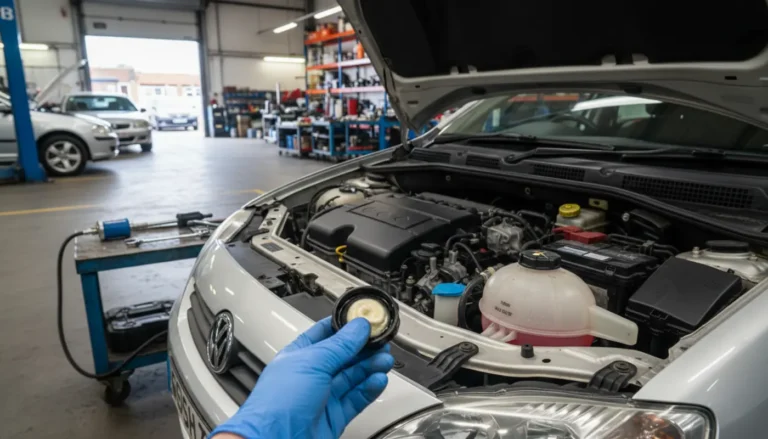
A head gasket is the seal that sits between the engine block and the cylinder head. Its job is to keep combustion pressure inside the cylinders while keeping engine oil and coolant in their own separate passages. When people say a car has a "blown head gasket", they usually mean this seal has failed, not that anything has literally exploded under the bonnet.
Although the gasket itself may look like a fairly thin component, it works in one of the harshest parts of the engine. It has to cope with heat, pressure, vibration, coolant, oil and repeated combustion events every time the engine runs. That is why a small failure can quickly become a much larger engine problem if it is ignored.
For UK motorists, head gasket issues often appear as overheating, coolant loss, persistent white exhaust vapour, rough running or creamy deposits in the oil. Those symptoms are important warning signs, but they are not proof on their own. Similar problems can be caused by a radiator leak, water pump fault, thermostat issue, oil cooler failure, cracked cylinder head or other engine fault.
If a confirmed head gasket failure has caused serious engine damage, repair may not always be the most sensible route. In those cases, Motor Fix Way can help motorists compare replacement engine options from UK suppliers, while still making sure compatibility, warranty terms and supply arrangements are properly considered.
The head gasket performs three main sealing jobs. First, it seals combustion pressure inside each cylinder. Petrol and diesel engines rely on compression to produce power, so if pressure escapes between the cylinder head and engine block, the engine may misfire, lose power or run unevenly.
Second, the gasket separates coolant from engine oil. Coolant circulates through passages to control temperature, while oil lubricates moving parts such as bearings, camshafts and pistons. If the two mix, the oil can lose its ability to protect the engine and the cooling system may become contaminated.
Third, the gasket prevents leaks between cylinders and to the outside of the engine. Not every failure sends white smoke from the exhaust. Some failures cause external coolant or oil leaks, compression loss between adjacent cylinders, or combustion gases entering the cooling system.
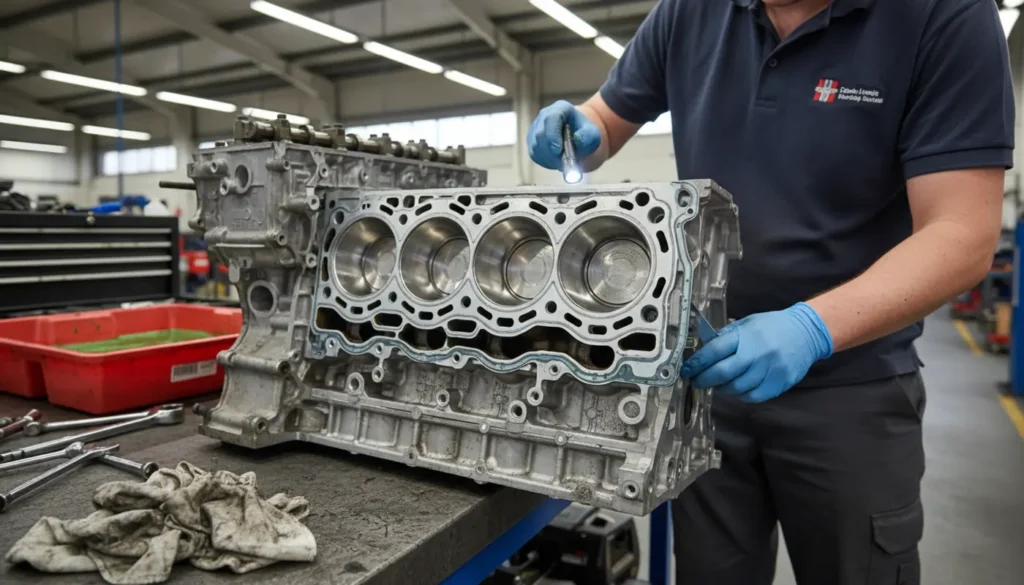
The head gasket is sandwiched between the cylinder head at the top of the engine and the engine block below it. The cylinder head contains components such as valves, camshafts and sometimes injectors or spark plugs, depending on the engine design. The engine block contains the cylinders, pistons and crankshaft.
A simple way to picture it is:
This position explains why head gasket repair is labour intensive. Access usually requires removing many surrounding components and lifting off the cylinder head. On some engines, that is relatively straightforward for a professional technician. On others, tight engine bays, timing components, turbochargers or complex ancillaries make the work much more involved.
Head gasket symptoms vary depending on where the seal has failed. A small leak between a cylinder and coolant passage may look very different from a failure between an oil gallery and coolant passage. That is why proper diagnosis matters.
Persistent white exhaust smoke or steam can occur when coolant enters a cylinder and is burnt during combustion. Brief white vapour on a cold morning is usually condensation and is not the same thing. It becomes more concerning when the vapour continues after the engine is warm, especially alongside coolant loss or rough running.
Overheating is another common warning sign. Combustion gases may enter the cooling system, coolant may be lost internally, or the original overheating fault may have damaged the gasket. Continuing to drive an overheating vehicle can warp the cylinder head, damage bearings and turn a repairable problem into a replacement engine conversation.
Milky or creamy oil can suggest coolant contamination, particularly if it appears on the dipstick or throughout the oil. However, a small creamy deposit under the oil filler cap can sometimes be caused by condensation, especially on cars used mainly for short journeys. It is a clue, not a courtroom confession from the gasket.
Other possible symptoms include bubbling in the coolant expansion tank, unexplained coolant loss, oil film in the coolant, misfires, poor starting, loss of power or a sweet smell from the exhaust. If the engine management light is on as well, it is worth understanding what that warning may mean. Motorists may find this related guide on what the engine management light means useful before deciding what to do next.
You should be very cautious about driving with a suspected head gasket problem. If the temperature gauge rises, a coolant warning appears, the engine misfires badly, steam is escaping or coolant is disappearing quickly, stop somewhere safe and arrange professional assistance. Do not open a hot pressurised coolant cap, as scalding coolant can escape suddenly.
There may be cases where a vehicle still runs and a garage is only a short distance away, but that decision depends on the actual symptoms and risk. Driving a vehicle that is overheating or losing coolant can cause major engine damage. It can also damage the catalytic converter or diesel emissions equipment if coolant or unburnt fuel enters the exhaust system.
A good diagnosis normally uses several checks rather than relying on one symptom. The technician may begin with a visual inspection, checking coolant level, oil condition, visible leaks, hose condition, radiator condition and any stored fault codes.
A cooling system pressure test can help show whether the system holds pressure. If pressure drops, there may be an external leak, internal leak or another cooling system fault. A combustion-gas test, often called a block test, checks for combustion gases in the coolant. It is useful, but a negative result does not rule out every possible gasket failure.
Compression testing compares pressure between cylinders, while a leak-down test uses compressed air to help identify where pressure is escaping. In more serious or uncertain cases, the cylinder head may need to be removed so the gasket, head and block can be inspected. The head may also need flatness checks, crack inspection or pressure testing by a specialist engineering workshop.
No. Head gasket symptoms overlap with several other faults, which is why guessing can become expensive. Overheating may come from a stuck thermostat, blocked radiator, failed water pump, non-working cooling fan, damaged hose or low coolant. White exhaust vapour may be normal condensation, coolant entering a cylinder, a cracked cylinder head or, in some cases, another engine issue.
Milky oil may point to coolant contamination, but an oil cooler fault can sometimes create similar symptoms. Coolant loss could be a hose, radiator, heater matrix, pump seal or internal leak. Misfires can be caused by ignition coils, injectors, sensors, compression faults or wiring issues. The right repair depends on finding the root cause, not just replacing the most famous suspect.
A proper head gasket repair usually involves confirming the fault, draining fluids, removing the cylinder head, inspecting the head and block, fitting the correct gasket and reassembling everything using the manufacturer's specified process. Many engines use stretch bolts that must be replaced rather than reused, but the correct procedure varies by engine.
If the cylinder head is distorted, it may need machining if the manufacturer's limits allow it. If it is cracked, replacement or specialist repair may be needed. The cooling system should also be checked carefully, because a new gasket can fail again if the original overheating cause remains.
Oil, coolant and filters may need replacing, especially where contamination has occurred. The cooling system may also require flushing and careful bleeding to remove air pockets. After repair, the engine should be checked for correct temperature control, leaks, smooth running and any remaining fault codes.
Head gasket repair may be worthwhile when the engine is otherwise healthy, damage is limited, the cylinder head and block are within repairable limits, and the quotation is clear. It is often the preferred route when the vehicle is in good condition and the repair cost is sensible compared with its value.
A replacement engine may be considered if the engine has suffered severe overheating, bearing damage, cracked components, low compression across multiple cylinders or repair costs that approach the value of the vehicle. This does not mean every blown head gasket needs a replacement engine. It simply means severe secondary damage can change the financial decision, especially when you are comparing used replacement engines with a full repair quotation.
If a replacement engine is being considered, compatibility must be checked carefully. The registration number alone may not be enough. Suppliers may need the VIN, exact engine code, production year, fuel type, emissions equipment, power output, gearbox type and details of ancillaries. The same make, model and engine size does not automatically guarantee a correct match.
Before authorising work, ask for a written diagnosis and a clear quotation. A head gasket job can involve more than the gasket itself, so it is important to know what is included and what may be extra after dismantling.
Head gasket repair costs vary widely because engine layout, access, labour rates, machining, replacement bolts, fluids, diagnostics and extra damage all affect the final price. Treat broad online figures as general guidance only, not a guaranteed quotation for your vehicle. If the repair is close to the car's value, it may also be sensible to compare reconditioned engine options alongside the repair estimate.
An MOT test does not directly certify that a head gasket is healthy. However, related symptoms can affect the test. Persistent visible smoke, emissions outside the applicable limits, an illuminated engine malfunction indicator lamp on relevant vehicles, or serious fluid leaks may be assessed under MOT rules.
The result depends on the vehicle's age, fuel type, emissions standard and the specific defect present. The DVSA MOT inspection manual should be checked for the relevant current rules, including emissions, warning lamp and smoke-related requirements, while its section on nuisance-related defects is also useful where visible smoke or serious fluid leaks are involved.
If an engine is replaced after a severe head gasket failure, the vehicle still needs to remain compatible with applicable emissions and roadworthiness requirements. That is another reason why the exact engine code and specification matter.
You cannot prevent every gasket failure, but good maintenance helps. Keep the coolant at the correct level, use the manufacturer-specified coolant type, investigate overheating promptly and repair leaks before they become serious. Regular servicing also helps ensure the oil, filters and cooling system are kept in suitable condition.
Pay attention to temperature changes, warning lights, heater performance and unexplained coolant loss. If the car starts running hotter than usual, do not simply top it up repeatedly and hope for the best. Engines are not known for healing themselves, however optimistic we may feel on a Monday morning.
What is a head gasket in simple terms?
It is the seal between the engine block and cylinder head. It keeps combustion pressure, coolant and engine oil where they should be.
Does white smoke always mean a blown head gasket?
No. Persistent white vapour after warm-up can be a warning sign, but cold start condensation and other faults can look similar.
Can a blown head gasket be repaired?
Often, yes, if the cylinder head, engine block and wider engine are still within repairable limits. Severe overheating or internal damage may make replacement a better option.
Is creamy oil always caused by the head gasket?
No. Coolant contamination is one possibility, but short journeys and condensation can sometimes create creamy deposits around the filler cap.
Should I choose repair or a replacement engine?
Base the decision on a confirmed diagnosis, the extent of damage, vehicle value, compatibility checks, quotation details and warranty terms. Do not assume replacement is necessary until the fault has been properly assessed.