

12 November 2026
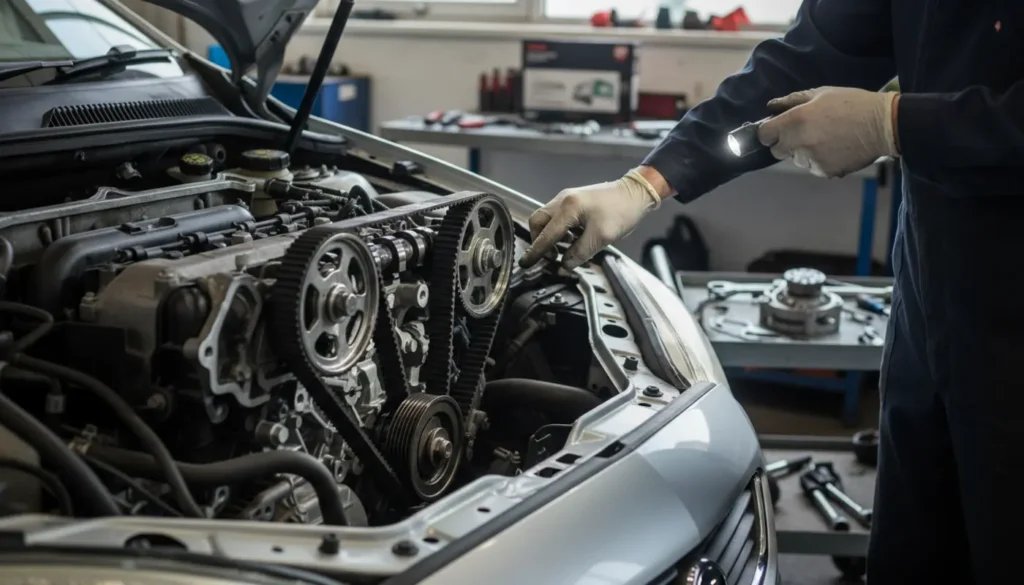
A timing belt, also known as a cambelt, does not have one universal lifespan. The correct replacement interval depends on the exact make, model, engine variant and manufacturer service schedule, and it is usually based on age or mileage, whichever comes first. Some vehicles may need a belt much sooner than others, so a generic rule is useful only as a rough guide, not a decision you should rely on.
In the UK, many motorists start thinking about the timing belt when a car reaches higher mileage, when buying a used vehicle, or when a garage mentions that the cambelt is due. That is sensible, because a timing belt is a small component with a very important job. If it slips or snaps, the engine can stop immediately and, on some engines, serious internal damage can follow.
The good news is that timing-belt replacement is usually planned maintenance rather than a surprise repair. If you know where to check, what records to look for and which questions to ask, you can avoid guesswork and make a calm, informed decision. If a belt has already failed and engine damage is suspected, Motor Fix Way can help motorists compare replacement engine options from UK suppliers where repair is not the most practical route.
Timing-belt intervals vary widely. General motoring guidance often mentions broad ranges such as several years and tens of thousands of miles, but those figures are only background information. The figure that matters is the interval set for your specific engine by the vehicle manufacturer.
Most timing-belt schedules work on a time and mileage basis. That means a belt may be due even if the vehicle has covered relatively few miles. Rubber and composite belt materials age over time, and low mileage does not stop deterioration altogether. A seven-year-old car used only for local trips may still need attention if it has reached the manufacturer's age limit, even if the odometer looks reassuring.
The phrase to remember is "whichever comes first". If a schedule says replacement is due at a certain mileage or age, the earlier limit normally applies. Waiting for both limits to be reached is a common and costly misunderstanding.
The correct timing-belt interval depends on the exact engine design, not simply the badge on the bonnet. Two cars from the same manufacturer, or even the same model range, may have different requirements depending on fuel type, engine code, production year, power output and transmission.
To confirm the correct interval, check the owner's handbook, the digital service record where available, or manufacturer service information. A repairer may also use the registration number, VIN and engine code to identify the correct schedule. This is especially important on vehicles where several engines were offered during the same model year.
If you are unsure whether your vehicle has a timing belt, timing chain or wet belt, it is worth confirming before authorising work. Motor Fix Way has a helpful related article on checking whether your car has a timing belt or chain, which explains why the distinction matters.
A timing belt synchronises the crankshaft and camshaft so the engine's valves open and close at the correct moment. Put simply, it keeps the engine's moving parts working in time. When that timing is wrong, the engine may run badly, fail to start or suffer internal damage.
A timing chain performs a similar role but is made from metal and runs differently. Timing chains are sometimes described as lasting the life of the engine, but that should not be taken to mean they are maintenance-free. Chains, guides, tensioners and lubrication can still cause problems, and the correct inspection or repair approach remains vehicle specific.
A wet belt is a timing belt designed to run in engine oil. These systems make correct oil specification and servicing particularly important, because contaminated or unsuitable oil can contribute to belt deterioration. If your vehicle uses a wet belt, do not assume a conventional dry-belt interval applies.
A timing belt can fail before its scheduled interval if other components or conditions cause extra stress. This is why a cambelt service is not always just a matter of fitting a new belt and calling it done.
Because many timing belts are hidden behind covers, condition is not always easy to judge visually. Even if part of the belt looks acceptable, it may still be overdue by age or mileage. A belt can also fail with little warning, which is why scheduled replacement is safer than waiting for symptoms.
Possible timing-belt warning signs include ticking, rubbing, rattling or slapping noises from the timing-cover area. Other symptoms can include misfires, rough idling, reduced power, difficulty starting, failure to start, or visible cracking and missing teeth where safe inspection is possible.
These symptoms are not proof on their own. Similar problems can be caused by ignition faults, fuel-system issues, sensors, compression loss, auxiliary belt problems or other timing-system components. That is why it is best to treat symptoms as a reason to stop and investigate, not as a confirmed diagnosis.
If you hear a serious new noise from the timing-belt area or the engine suddenly cuts out, avoid repeatedly trying to restart the car. If the belt has slipped or broken, further cranking may make damage worse on some engines. Arrange professional inspection or recovery instead.
If a timing belt snaps, the camshaft and crankshaft can lose synchronisation. The engine may stop immediately, refuse to restart, or turn over unusually quickly because compression has been affected.
On some engines, pistons and valves can collide when the timing is lost. This can bend valves and may damage other internal parts. In other engine designs, the outcome may be less severe, but you should never assume the engine has escaped harm without proper testing.
The next step is usually diagnosis. A repairer may need to check belt condition, timing alignment, compression, cylinder leakage or internal damage before giving a reliable recommendation. Depending on the findings, the options might include a timing-belt repair, cylinder-head work, an engine rebuild or a replacement engine.
A proper timing-belt job may involve more than the belt itself. The exact parts list depends on the engine and manufacturer procedure, but many cambelt services include a timing-belt kit with related components.
Common items can include the belt, tensioner, idler pulleys and, where appropriate, the water pump. If the water pump is driven by the timing belt, replacing it at the same time is often considered sensible because much of the labour overlaps and the pump may have a similar service life. However, this is not universal. Some engines have water pumps driven separately, so the correct approach should be confirmed for the vehicle.
Coolant, seals, bolts or other fasteners may also be needed if the cooling system is opened or the manufacturer specifies one-use components. A quotation should explain what is included, not just say "cambelt change" and leave the rest to imagination.
A valid MOT does not confirm that the timing belt is safe, new or within its service life. The MOT is a roadworthiness test, not a full mechanical service or engine health check. GOV.UK explains the main car parts checked at an MOT, and general internal engine condition is not the same thing as a scheduled cambelt inspection.
This matters because a car can pass an MOT and still be overdue a timing-belt replacement. Emissions, lights, brakes and tyres may all be acceptable while the cambelt service history remains uncertain. Treat the MOT and service schedule as separate parts of responsible vehicle ownership.
If you are buying a used car, timing-belt evidence is worth checking carefully. A stamp in a service book can be useful, but an invoice is better because it may show exactly what was fitted, when the work was done and at what mileage.
Look for the replacement date, mileage, garage details, parts used and whether the tensioners, idlers and water pump were included. Also check whether the work was done at the manufacturer's recommended interval. If the seller cannot provide reliable evidence, it is reasonable to budget for inspection or preventive replacement, depending on the vehicle and advice from a qualified repairer.
Do not rely only on phrases such as "the previous owner said it was done". Timing belts are not a great place for folklore. A written record is far more useful than a confident shrug.
There is no single UK price for timing-belt replacement because access and parts vary significantly between engines. On some vehicles, the job is relatively straightforward. On others, access is tight and labour time can be much higher.
A good quotation should separate the main cost factors clearly. These may include parts, labour, coolant, seals, fasteners, water-pump replacement, diagnostic checks and VAT. If the vehicle has already broken down, recovery and fault-finding may also be involved. If the belt has failed and caused internal damage, the cost can move well beyond a routine cambelt service.
Before accepting a quote, ask whether it includes tensioners and idlers, whether the water pump is included, which parts specification will be used, what warranty applies to parts and workmanship, and what happens if additional faults are found during the job.
If a timing belt has snapped, a replacement engine is not automatically the answer. The right decision depends on the confirmed damage, vehicle value, repair cost, part availability and how long you plan to keep the vehicle.
Repair may make sense where damage is limited and the car is otherwise in good condition. More extensive internal damage may make used replacement engines or reconditioned engines worth comparing. In that situation, compatibility is critical. A replacement engine should be matched using details such as registration, VIN, engine code, fuel type, production year, power output and transmission configuration.
Supplier quotations can differ in what they include. One may be supply only, while another may include supplier-provided fitting. Warranty terms, included ancillaries, mileage evidence and testing information may also vary, so compare like for like before deciding.
The best timing-belt care is mostly about keeping to the correct service schedule and dealing with related faults promptly. You do not need to become an engine specialist, but you should keep good records and avoid postponing work once the belt is due.
Preventive replacement may feel like an unwelcome bill, but it is usually far easier to plan than dealing with a failed belt at the roadside. A little paperwork and timely maintenance can save a great deal of uncertainty later.
How many miles does a timing belt last?
There is no universal mileage for every car. Check the manufacturer schedule for your exact engine and follow the mileage or age limit, whichever comes first.
Can a timing belt fail without warning?
Yes. Some belts show symptoms such as noise, rough running or starting problems, but others may fail with little obvious warning, which is why scheduled replacement is important.
Does a low-mileage car still need a cambelt change?
It may do if the manufacturer's age limit has been reached. Timing-belt materials can deteriorate with time, even when the car has not covered many miles.
Should the water pump be changed with the timing belt?
Often it is sensible where the water pump is driven by the timing belt or specified by the manufacturer. It is not automatic on every engine, so confirm what is required for your vehicle.
Is a timing chain the same as a timing belt?
No. A timing chain is a different component with different maintenance requirements, although it performs a similar timing role inside the engine.