
6 November 2026
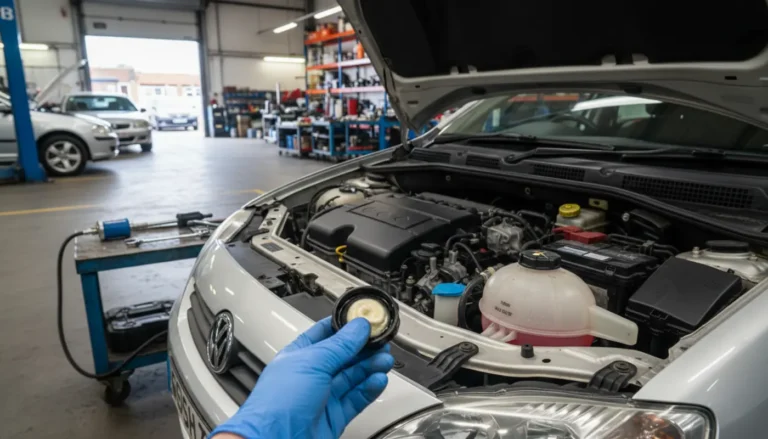
The engine management light means your car's engine management or emissions control system has detected a fault. It does not tell you exactly which part has failed, and it does not automatically mean the engine is ruined. It is a warning that the vehicle needs proper diagnosis, especially if the light stays on, flashes, or appears alongside poor running, smoke, overheating or loss of power.
You may also hear it called the check engine light, engine warning light or Malfunction Indicator Lamp, often shortened to MIL. On many cars it appears as an amber or yellow engine-shaped symbol, although the exact design can vary by manufacturer. The important point is how the light behaves and how the car feels when you drive it.
If your vehicle is still running smoothly, a steady amber light usually means you should arrange a diagnostic check promptly rather than panic at the roadside. If the light is flashing, the engine is misfiring, the car is shaking, or there is a red oil pressure or temperature warning, treat it as urgent and stop safely where appropriate.
If diagnosis eventually points towards serious engine damage rather than a sensor, wiring or emissions fault, Motor Fix Way can help UK motorists compare replacement engine options and supplier quotations. That decision should only come after the fault has been properly confirmed.
The engine management light is part of the vehicle's on-board monitoring system. Modern cars use an Engine Control Unit, or ECU, to monitor fuel injection, ignition, air intake, exhaust emissions and various sensors. When the ECU sees a reading outside the expected range, it may store a Diagnostic Trouble Code and switch on the warning light.
That code is useful, but it is not a complete diagnosis. For example, a code relating to an oxygen sensor does not always prove the sensor itself has failed. The real cause could be an exhaust leak, wiring fault, fuelling issue or another condition affecting the sensor reading. This is why replacing parts purely because a code mentions them can become an expensive guessing game.
It is normal for the engine management light to illuminate briefly when you turn the ignition on. This is part of the dashboard self-check. On most vehicles it should go out once the engine starts, although some models follow a slightly different sequence described in the handbook.
If the light stays on after starting, comes on while driving, or returns after being cleared, the car is telling you there is still a fault to investigate. Ignoring it may allow a small issue to become a larger one, particularly where misfiring, overheating or emissions equipment is involved.
The colour and behaviour of the warning light give you a rough idea of urgency, but they still do not identify the exact fault. Always check the vehicle handbook, because manufacturers can use different symbols and warning strategies.
A steady amber light with no symptoms may allow careful limited driving to a garage, but that does not mean the fault is harmless. A flashing light, severe vibration, heavy smoke, burning smell, loud mechanical noise or rising temperature gauge should change your plan from “book it in” to “stop and get help”.
Sometimes limited driving is possible, but it depends on the symptoms. If the light is steady amber, the car drives normally, the temperature is stable and there are no red warnings, it may be reasonable to drive carefully to a trusted garage or diagnostic technician. Avoid hard acceleration, towing and motorway trips until the cause is known.
You should not continue driving if the vehicle is overheating, showing an oil pressure warning, producing heavy smoke, misfiring badly, losing power suddenly or making abnormal mechanical noises. Continued driving in those situations can turn a repairable issue into major engine damage.
Do not confuse the engine management light with other dashboard warnings. A red oil can symbol, coolant temperature warning, battery charging light, gearbox warning, DPF warning or glow plug light may require different action. If in doubt, stop somewhere safe and check the handbook before continuing.
The engine management light can be triggered by many different systems, which is why diagnosis matters. Some faults are relatively minor, while others need urgent attention. The warning light itself cannot separate the two.
Common fault areas include engine sensors, wiring and connectors. Air flow sensors, oxygen sensors, temperature sensors, pressure sensors and throttle position sensors all feed information to the ECU. A loose connector, damaged wire or weak battery voltage can cause confusing fault codes, so visual inspection and electrical testing are often just as important as the scan itself.
Ignition and misfire faults are another frequent cause, especially on petrol vehicles. Spark plugs, ignition coils, fuel injectors and compression problems can all make the engine run unevenly. A flashing warning light with rough running should be taken seriously because unburnt fuel can overheat and damage the catalytic converter.
Air intake, fuelling and throttle issues can also bring the light on. A split intake hose, vacuum leak, fuel pressure problem or electronic throttle fault may cause poor acceleration, stalling, hesitation or limp mode. Diesel vehicles may also show faults linked to EGR systems, DPF equipment or selective catalytic reduction systems where fitted.
Mechanical engine faults are possible, but they should not be assumed. Low compression, timing problems, lubrication failure or overheating damage can trigger engine management warnings, yet many illuminated lights are caused by external or control system issues rather than a failed engine block. A careful diagnostic process prevents unnecessary replacement.
A proper diagnosis starts with information. Note whether the light is steady or flashing, when it appears, whether the engine is hot or cold, and what the vehicle is doing at the time. Useful symptoms include poor starting, rough idle, stalling, smoke, loss of power, higher fuel use or unusual noises.
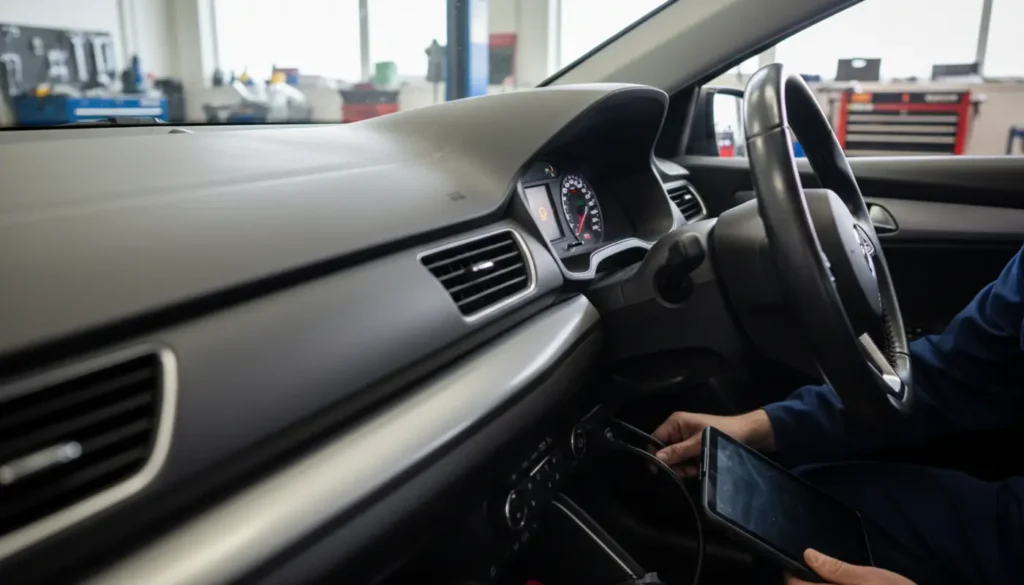
The next step is an OBD or EOBD scan. OBD stands for On-Board Diagnostics, and the scan tool communicates with the vehicle through a diagnostic socket, commonly located beneath the dashboard. The equipment can retrieve stored and pending fault codes, and more advanced tools can also show live data from sensors.
If you want a simple explanation of the process before visiting a garage, our related guide on checking engine light codes in the UK explains how fault codes are read and why they need interpreting carefully.
The scan is only the beginning. A technician may then inspect wiring, compare live data, check fuel pressure, test ignition components, inspect emissions equipment or carry out compression testing. Clearing the light without recording the codes can remove useful evidence, and if the underlying issue remains, the warning will usually return.
An illuminated engine management light can affect the MOT on relevant vehicles. The DVSA MOT inspection manual explains that the engine Malfunction Indicator Lamp is checked on specified vehicles, and that a lamp which is inoperative or indicates a malfunction is classed as a major defect where the test applies.
The exact rule depends on the vehicle type, fuel type and date of first use, so it is best to rely on the current official inspection wording rather than hearsay. You can check the relevant DVSA section in the GOV.UK MOT inspection manual.
Resetting the warning light simply to get through an MOT is not a proper fix. If the fault remains, the light may return, emissions readiness checks may be affected, and the vehicle may still fail on emissions or other related defects.
No, not by itself. Most engine management lights do not automatically mean the engine needs replacing. Many are caused by sensors, wiring, ignition parts, air leaks, fuelling issues or emissions control faults. These may be repairable without replacing the engine.
Engine replacement is usually considered only when testing confirms serious internal damage or when the cost of repairing the existing engine is not economical for the vehicle. Examples may include severe overheating damage, lubrication failure, major timing failure or low compression caused by internal wear or damage. Even then, the decision should compare the vehicle's age, value, condition and future use.
If a replacement engine is recommended, you can compare replacement engine quotes from relevant UK suppliers, but compatibility must be checked carefully. The registration and VIN are useful starting points, but the exact engine code, fuel type, displacement, power output, emissions specification, production year and transmission can all matter. Two engines may look similar and share a model name, yet still have different sensors, ancillaries, ECU requirements or emissions equipment.
Before spending money on major engine work, ask for a clear explanation of the evidence. A good recommendation should be based on diagnostic codes plus physical testing, not just a dashboard light and a hunch.
Supply-only quotations may suit a garage or experienced repairer, but the buyer must arrange fitting and confirm warranty responsibilities. Supply-and-fit quotations may include installation through an independent supplier or garage, but you should still check exactly what is included. When comparing used and reconditioned engine options, do not compare a part-only price with a fitted price as though they are the same thing.
Not every engine management light can be prevented, but good maintenance helps. Follow the manufacturer's service schedule, use the correct oil and filters, keep an eye on coolant level and investigate unusual running as soon as it appears. Small misfires, air leaks and sensor problems are often easier to deal with before they affect other components.
Keep invoices, diagnostic reports and servicing evidence, especially if the car is under warranty or has recently had repair work. If a warning light returns after work has been completed, contact the garage promptly and provide as much detail as possible about when it happens. A repeat warning does not always mean the same part has failed, but it does mean the vehicle needs another proper check.
Is the engine management light always serious?
Not always. It can be caused by anything from a sensor or wiring issue to a significant engine, emissions or powertrain fault, so the behaviour of the light and the vehicle's symptoms matter.
Can I drive with a steady amber engine management light?
Limited careful driving may be possible if the car runs normally and there are no red warnings, overheating, smoke or severe noises. Arrange diagnosis promptly rather than continuing normal use indefinitely.
What should I do if the engine management light is flashing?
Treat a flashing light as urgent. Reduce load on the engine, stop safely where appropriate and seek professional help, especially if the car is misfiring, shaking or losing power.
Will my car fail its MOT with the engine management light on?
On relevant vehicles, an engine Malfunction Indicator Lamp that is inoperative or indicates a malfunction is treated as a major defect. The exact application depends on the vehicle and MOT rules for its type and first use date.
Does the warning light mean I need a replacement engine?
No. A replacement engine should only be considered after proper testing confirms serious internal damage or an uneconomical repair, and after compatibility has been checked carefully.