6 November 2026
A blown head gasket is usually suspected when a car starts overheating, losing coolant, producing persistent white exhaust smoke, running roughly or showing milky contamination in the oil. The important word is suspected. No single symptom proves that the head gasket has failed, because the same warning signs can also be caused by cooling system leaks, thermostat faults, condensation, injector issues, turbo problems or other engine faults.
The safest approach is to take the symptoms seriously, stop driving if the engine is overheating, and arrange proper diagnosis before assuming the worst. A head gasket fault can become expensive if the car is driven while hot, but replacing parts without confirmation can be just as costly in a different way.
If the engine has already suffered major damage, some owners compare repair costs with replacement engine options. Motor Fix Way helps UK motorists compare quotations from relevant suppliers, including used and reconditioned engine options where suitable, but the first step is understanding what the symptoms actually mean.
The most common signs of a blown head gasket include persistent white smoke from the exhaust after the engine is warm, repeated overheating, unexplained coolant loss, creamy or milky oil, rough running, loss of power and a sweet smell from the exhaust. These signs become more concerning when several appear together.
A brief puff of white vapour on a cold morning is not the same as thick white smoke that continues once the engine has reached normal temperature. Likewise, a small amount of creamy residue under the oil filler cap may simply be condensation from short journeys, especially in winter. The pattern matters, not just one isolated clue.
The head gasket sits between the cylinder head and the engine block. Its job is to seal three very different things that must not mix: combustion pressure, engine oil and coolant. That is a big responsibility for a fairly unglamorous component, rather like being the bouncer at a very busy mechanical nightclub.
When the gasket fails, combustion gases may enter the cooling system, coolant may leak into a cylinder, oil and coolant may mix, or compression may be lost between cylinders. Different failure points create different symptoms, which is why one blown head gasket may cause white smoke while another mainly causes overheating or poor running.
If you want a simple background explanation before digging into symptoms, Motor Fix Way has a useful guide on what a head gasket is and how it works.
Thick white smoke from the exhaust can happen when coolant enters the combustion chamber and is burned with the fuel and air mixture. It may also be accompanied by a sweet smell. This is more worrying if the smoke continues after the engine has warmed up and the coolant level keeps dropping.
Do not confuse this with normal condensation. Exhaust systems collect moisture, and on cold mornings that moisture can appear as white vapour for a short time. If it clears quickly and the coolant level stays steady, it is less likely to point towards a head gasket fault.
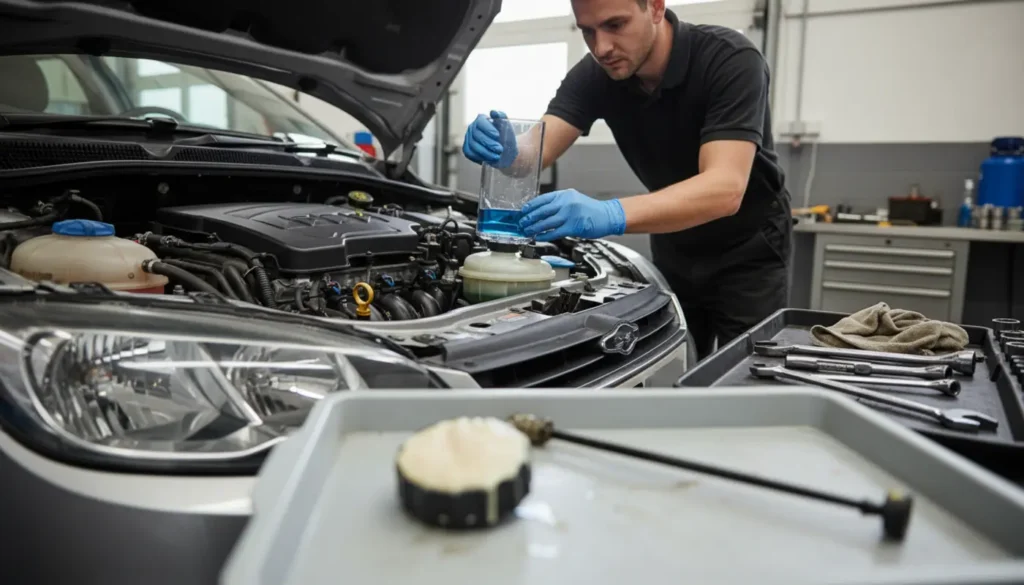
Coolant mixing with engine oil can create a pale, creamy substance sometimes described as mayonnaise. It may appear on the dipstick, inside the oil filler cap or in severe cases throughout the oil. This is serious because contaminated oil cannot lubricate the engine properly.
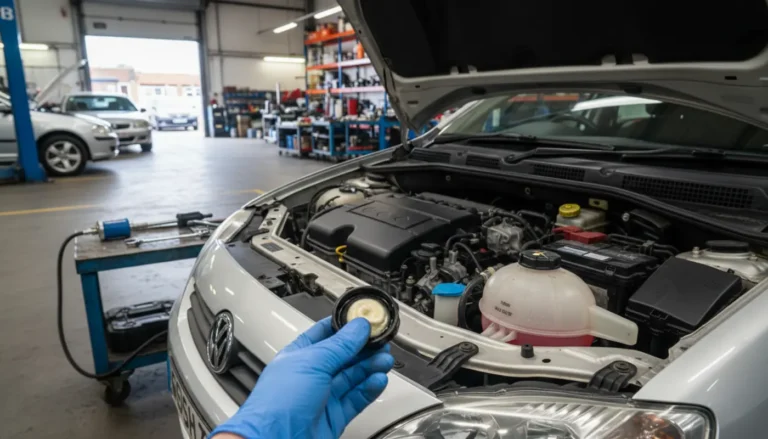
However, a little creamy residue under the filler cap is not always proof of head gasket failure. Cars used mainly for short journeys may not get hot enough to evaporate condensation inside the engine. Check the dipstick, coolant level and other symptoms together, and if in doubt, have the oil and cooling system inspected. For basic owner checks, this guide to checking engine oil correctly may help you spot changes in level and condition.
Overheating can be both a cause and a result of head gasket failure. A failed gasket may allow combustion gases to pressurise the cooling system or allow coolant to escape internally. On the other hand, a faulty radiator, water pump, thermostat, cooling fan, hose or expansion tank cap can cause overheating first and damage the gasket later.
If the temperature gauge enters the red zone or a warning light appears, do not keep driving to see if it settles down. It usually does not, and the engine will not appreciate the optimism.
Coolant disappearing without an obvious puddle under the car can suggest an internal leak, but external leaks are not always easy to see. Coolant can escape from hoses, radiator seams, water pumps, heater matrix connections or expansion tanks and evaporate on hot engine parts.
Repeatedly topping up the coolant without finding the cause is risky. Coolant loss means the engine may overheat suddenly, especially in traffic or on a motorway climb.
A head gasket leak can reduce compression in one or more cylinders, causing misfires, rough idling, hesitation or loss of power. Coolant entering a cylinder can also upset combustion. That said, ignition coils, injectors, sensors, fuel pressure problems and other compression faults can create similar symptoms.
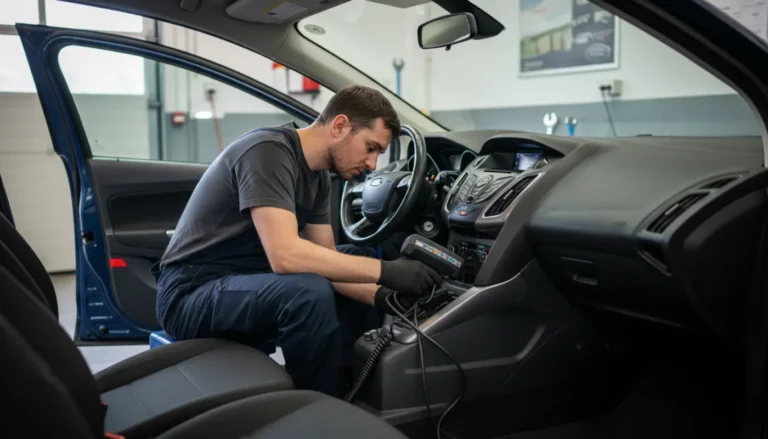
If the engine management light is on, a diagnostic scan may reveal useful supporting information, although fault codes alone cannot confirm a blown head gasket.
Several faults can imitate a blown head gasket, which is why careful diagnosis matters. Before condemning the gasket or the entire engine, a technician will usually look for patterns and test results rather than relying on one visible symptom.
A professional diagnosis usually combines inspection and testing. A technician may check the coolant and oil condition, look for external leaks, inspect the exhaust smoke, scan for fault codes and assess whether the engine has overheated.
A cooling system pressure test can help show whether the system is holding pressure, although it may not identify every internal leak. A combustion gas test, sometimes called a block test, checks whether combustion gases are entering the coolant. Compression and cylinder leak-down tests can help reveal whether cylinder sealing is poor and where pressure may be escaping.
Even then, results sometimes need interpretation. Low compression could be caused by valves, piston rings or cylinder damage, not only the head gasket. If the engine is dismantled, the cylinder head and block may need checking for warping, cracks or surface damage before repair is approved.
Driving with a suspected blown head gasket is not recommended if the engine is overheating, losing coolant quickly, misfiring badly, producing heavy smoke or showing warning lights. Continuing to drive can turn a repairable problem into a damaged cylinder head, cracked component, contaminated lubrication system or complete engine failure.
If the temperature rises sharply, pull over safely, switch off the engine and let it cool naturally. Do not remove the coolant cap while the engine is hot, because the system can be pressurised and hot coolant or steam can escape. Official Highway Code guidance gives the same safety warning in its section on vehicle maintenance and overheated engines.
A blown head gasket does not automatically mean the whole engine must be replaced. If the engine has not overheated severely and the cylinder head and block are serviceable, a head gasket repair may be sensible. This may involve replacing the gasket, head bolts, fluids, filters and timing components, along with pressure testing or machining the cylinder head where appropriate.
An engine replacement may be considered when the engine has suffered severe overheating, internal damage, cracks, bearing damage or repair costs that are uneconomic compared with the vehicle’s value. The right answer depends on the car, its service history, mileage, overall condition, parts availability and the quotation details.
Replacement options may include used, reconditioned or, where available, new engines. A used engine is usually removed from another vehicle, while a reconditioned engine may have had selected components inspected, renewed or machined. The term reconditioned is not a single universal standard, so always ask exactly what work has been carried out and what testing supports the claim.
If replacement becomes the practical route, compatibility must be checked carefully. Do not choose an engine only because it comes from the same make, model, fuel type or engine size. Modern vehicles can use different engine codes, emissions equipment, wiring, sensors, turbocharger arrangements and transmission pairings across similar-looking models.
Suppliers may ask for the registration number, VIN, exact engine code, fuel type, power output, production year, transmission type and details of the current fault. If you are unsure where to start, this guide to finding your engine code explains why the exact code matters before buying a replacement engine.
It is also worth asking whether the quotation is for a bare engine or a more complete unit. Clarify whether injectors, turbocharger, manifolds, starter motor, alternator, sensors, flywheel, clutch, ECU, wiring, fluids, filters, delivery and fitting are included. A cheaper part-only price is not always cheaper once the full job is added up.
Whether you are choosing a head gasket repair or replacement engine, the details matter. Ask for the diagnosis, what is included, what might cost extra and what warranty applies. A supplier warranty and your statutory consumer rights are separate things, and warranty terms can vary widely.
No. An MOT checks specified safety and environmental items; it is not a full internal engine health inspection. A car may pass an MOT while still having an early head gasket issue, especially if the symptoms are intermittent or not visible during the test.
However, related symptoms can affect an MOT. Excessive visible smoke, relevant warning lamps or serious leaks may cause problems depending on the vehicle and test criteria. Passing an MOT should never be treated as proof that the head gasket, cylinder head or cooling system is healthy.
What is the clearest sign of a blown head gasket?
The clearest warning is usually a combination of symptoms, such as persistent white smoke, overheating, coolant loss and contaminated oil. A garage test is still needed before the fault can be confirmed.
Does white smoke always mean the head gasket is blown?
No. Brief white vapour on a cold start is often condensation, while persistent thick smoke after the engine warms up is more concerning, especially with coolant loss.
Does milky oil always mean head gasket failure?
No. Milky residue under the filler cap can come from condensation after short journeys. Milky oil on the dipstick or widespread oil contamination needs urgent investigation.
Is it better to repair the head gasket or replace the engine?
It depends on the engine damage, vehicle value, repair estimate, replacement engine specification and warranty. A repair may suit a healthy engine, while replacement may be considered after severe overheating or internal damage.
Can I drive a short distance with a suspected blown head gasket?
Avoid driving if the engine is overheating, losing coolant, misfiring heavily or showing a temperature warning. Recovery or professional inspection is usually the safer choice.