6 November 2026
Yes. In normal UK motoring language, a timing belt and a cambelt are usually the same component. They are two common names for the toothed belt that keeps key parts of an engine moving in time with each other. If a garage, service book or used car advert mentions a cambelt, it is generally referring to the timing belt.
The wording can feel confusing because different people use different terms. In the UK, cambelt is very common, while timing belt is widely used in manuals, manufacturer information and international automotive content. The important point is not the name, but whether your particular engine uses a belt, a timing chain or a wet belt system.
If you are checking maintenance history, buying a used car or dealing with a suspected timing failure, it is worth getting the terminology right before making decisions. A missed cambelt change can be a costly oversight, but a suspected belt issue should still be diagnosed properly before anyone assumes the worst. If belt failure has already caused internal engine damage, Motor Fix Way can help motorists compare replacement engine options from UK suppliers where that route is appropriate.
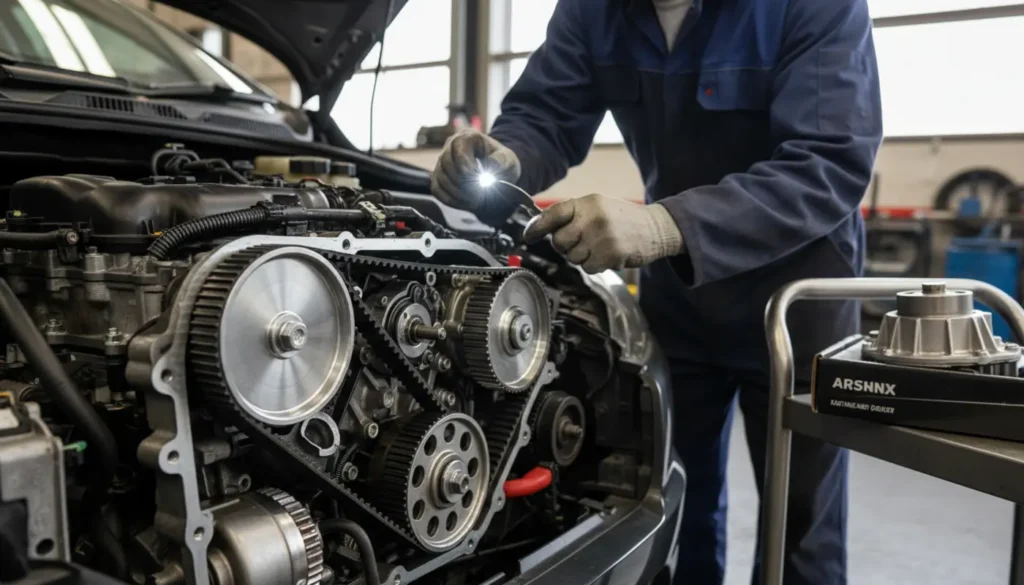
A timing belt and a cambelt normally mean the same thing: a reinforced toothed belt used to synchronise the crankshaft and camshaft. The word cambelt is short for camshaft belt, which explains why it is linked to the camshaft side of the engine. Timing belt describes the same part by what it does, which is controlling engine timing.
That said, it is still worth being precise. Not every engine has a conventional dry cambelt. Some use a metal timing chain, while others use a wet timing belt that runs inside the engine in oil. Two cars with the same model name may even use different timing systems depending on engine code, year, fuel type and power output.
If you want a deeper explanation of the component itself, Motor Fix Way has a helpful related article on what a timing belt does, which covers the basics in more detail.
The cambelt keeps the crankshaft and camshaft working together at exactly the right moment. The crankshaft is turned by the pistons moving up and down. The camshaft controls the opening and closing of the engine valves, which let air and fuel in and exhaust gases out.
For the engine to run smoothly, those movements need to be accurately synchronised. If the timing is wrong, the valves can open at the wrong point in the engine cycle. At best, the engine may run poorly or fail to start. At worst, internal engine parts can collide, causing serious damage.
The belt itself is usually made from reinforced rubber or synthetic material with teeth on its inner surface. Those teeth mesh with pulleys so the belt does not simply slip like an ordinary drive belt. Tensioners and idler pulleys help keep the belt correctly aligned and tensioned. On some engines, the water pump may also be driven by the timing belt, which is why it is sometimes replaced at the same time.
A cambelt and timing belt are usually the same part, but a timing chain is different. A chain performs a similar job by keeping the crankshaft and camshaft synchronised, but it is made from metal links and normally runs inside the engine with lubrication from engine oil.
A timing chain is not simply a cambelt that lasts forever. Chains can stretch, guides can wear, and tensioners can fail. Some timing chain problems become noticeable through rattling, poor running or warning lights, but symptoms vary and should not be treated as a definite diagnosis on their own.
A wet belt adds another layer of confusion. It is still a belt, but it runs inside the engine in oil rather than externally as a dry belt. Wet belt systems can have specific oil requirements and service considerations, so using the correct oil specification and following the manufacturer schedule is particularly important. If a car uses a wet belt, it should not be treated exactly like a traditional external cambelt.
No, not every car has a timing belt. Some petrol and diesel engines use cambelts, some use chains, and some use wet belt systems. Fully electric vehicles do not have an internal combustion engine cambelt, although hybrid vehicles may still have a petrol or diesel engine that needs timing system maintenance.
The only safe way to confirm the timing system is to check the exact vehicle details. That means more than just the make and model. You may need the registration, VIN, engine code, production year, fuel type, engine capacity and power output. A 1.6 diesel in one year or trim may not have the same timing arrangement as a visually similar model from another year.
This matters when buying parts, asking for quotes or assessing a used car. Relying on a forum post or an advert saying “chain engine” is risky unless it matches your exact engine variant. Manufacturer service information, a reliable service schedule and a qualified technician are better sources.
There is no universal cambelt replacement interval for every car. Manufacturers usually set an age limit, mileage limit or both. Where the schedule says replacement is due at a certain mileage or age, the usual principle is whichever comes first.
Age matters because belt materials can deteriorate over time, even on low-mileage vehicles. A car that has spent years doing short trips may still need a cambelt change if it has reached the time limit. Equally, a high-mileage vehicle may reach the mileage threshold before the age limit.
To confirm the correct interval, check the owner’s handbook, manufacturer service schedule and service records for the exact engine. If records are incomplete, it is sensible to ask a qualified garage to inspect the vehicle and advise. Visual checks can help in some cases, but a belt can look acceptable and still be overdue by age or mileage.
Some timing belt issues give warning signs, but many do not. That is one reason preventive replacement is so important. A belt may fail suddenly, especially if it is overdue, contaminated, incorrectly tensioned or affected by a related component failure.
Possible signs of a timing system problem can include misfiring, rough idling, difficulty starting, unusual ticking, rattling or squeaking noises, loss of power, or visible cracking and fraying where the belt can be inspected. However, those symptoms can also be caused by ignition faults, fuel issues, sensors, compression problems, auxiliary belt faults or other mechanical wear.
In other words, a noise from the engine bay does not automatically mean the cambelt is failing, and a smooth-running engine does not automatically mean the cambelt is safe. If there is any doubt, professional diagnosis is the sensible route. A technician may need to inspect timing alignment, scan for fault codes, check related components and assess the service history.
If a timing belt snaps or jumps teeth, the crankshaft and camshaft may no longer stay synchronised. The engine may stop immediately, refuse to restart or run very badly. In some engine designs, pistons and valves can collide, potentially causing bent valves, cylinder head damage, piston damage or broader internal engine failure.
The level of damage depends on the engine design and the circumstances of the failure. It is not accurate to say every snapped cambelt destroys the engine, but it is also not safe to assume a new belt alone will fix it. If the engine stops suddenly or you suspect timing failure, avoid repeated starting attempts and arrange recovery or professional inspection.
Where damage has occurred, repair may involve cylinder head work, valves, timing components and related labour. In some cases, especially on older vehicles or where damage is extensive, comparing repair with a compatible replacement engine may be worthwhile. Compatibility checks are crucial, because engine code, emissions equipment, transmission type and ancillary components can all affect whether a unit will fit and operate correctly.
A valid MOT does not prove that a cambelt is healthy or up to date. The MOT is a roadworthiness test, not a full mechanical service. GOV.UK explains that the MOT does not cover the general condition of the engine, clutch or gearbox, and its guidance on how the MOT test works is useful for understanding that distinction.
This is particularly important when buying a used car. A vehicle can have a fresh MOT and still have an overdue timing belt. The better evidence is a service invoice, manufacturer record or service book entry showing when the belt was replaced, the mileage at the time and what parts were fitted.
If a seller says the cambelt has been done, ask for documentation. A verbal assurance is not the same as proof, especially on vehicles where belt replacement is a significant maintenance item.
A cambelt job may be quoted in different ways, so it is important to compare like for like. A basic quote might refer only to the belt, while a more complete job may include the timing belt kit, tensioners, idler pulleys and, where applicable, the water pump.
The water pump is not always driven by the cambelt, and it is not automatically included in every job. However, where it is belt driven or difficult to access separately, many garages may recommend replacing it at the same time to avoid repeating labour later. Coolant, seals, bolts and ancillary parts may also be relevant depending on the engine design.
Before approving work, ask whether the quote includes parts, labour, VAT, coolant, the water pump, diagnostic checks and any warranty on parts and labour. Also ask whether the service record will be updated and whether you will receive an itemised invoice. That paperwork can be valuable later, both for maintenance planning and resale confidence.
Cambelt replacement costs vary widely because engine layouts vary widely. Some belts are relatively accessible, while others require more labour to reach. The parts included in the quote also make a difference. A belt-only price is not the same as a timing belt kit with water pump, coolant and labour.
If the belt has already failed, the cost picture changes completely. Diagnosis, recovery, internal engine inspection and damage repair may all need to be considered. A quote for scheduled preventive cambelt replacement should not be compared directly with a quote for repairing an engine after timing failure.
If engine replacement becomes part of the conversation, compare the full details. Is the quote supply only or supply and fitting? Is the replacement engine used or reconditioned? What testing evidence is available? What warranty is offered by the supplier, and what exclusions apply? Does the quote include fluids, timing components, programming, delivery or removal of the old unit? Clear questions now can prevent expensive misunderstandings later.
The biggest mistake is assuming that terminology alone solves the issue. Yes, timing belt and cambelt usually mean the same thing, but that does not confirm your engine type, replacement interval or repair needs.
A little checking goes a long way here. Confirm the exact engine, read the service schedule, keep invoices and ask for written quote details. It is not glamorous motoring admin, but it can save a great deal of stress.
Is a timing belt exactly the same as a cambelt?
Usually, yes. In normal UK use, timing belt and cambelt refer to the same toothed belt that controls engine timing between the crankshaft and camshaft.
Is a cambelt the same as a timing chain?
No. A cambelt is a belt, while a timing chain is a metal chain. They perform a similar timing function, but their design, servicing needs and failure patterns are different.
How often should a cambelt be changed?
Follow the manufacturer schedule for your exact vehicle and engine. The interval is usually based on age, mileage or both, with the earlier limit normally applying.
Does an MOT check the timing belt?
No. An MOT does not confirm the condition of the cambelt or prove that it has been replaced. Service invoices and maintenance records are the evidence to look for.
Does a snapped cambelt always mean I need a replacement engine?
Not always. Some failures are repairable, while others cause serious internal damage. A proper inspection is needed before deciding between repair and replacement.