6 November 2026
When your check engine light comes on, stay calm, check how the car is behaving and do not assume the engine has failed. The light, often called the engine management light or malfunction indicator lamp, means the vehicle has detected a possible fault in an engine, powertrain or emissions-related system. It is a warning to investigate, not a diagnosis on its own.
The right response depends on whether the light is steady or flashing, whether any other warning lights are showing and whether the car feels safe to drive. A car that is driving normally with a steady amber warning may not need to be stopped in the middle of the road, but it should still be checked promptly. A flashing light, smoke, overheating, severe shaking or loss of power should be treated much more seriously.
If diagnosis later shows serious internal engine damage, comparing repair and replacement options may become sensible. Motor Fix Way helps UK motorists compare replacement engine and gearbox quotations from suppliers, but the first step is always to understand the fault properly before buying parts or approving major work.
The check engine light is linked to the vehicle's onboard monitoring system. Depending on the make and model, your dashboard may show an engine-shaped symbol, the words "check engine", an engine management warning or another message in the driver display. Manufacturers use slightly different symbols and colours, so your handbook should always take priority.
In simple terms, the car has detected something outside its expected operating range. That could involve fuel delivery, ignition, emissions equipment, boost pressure, exhaust sensors, wiring, battery voltage, engine temperature or internal mechanical condition. It can also be triggered by related systems rather than the engine block itself.
For a deeper explanation of dashboard engine warnings, the Motor Fix Way article on what the engine management light means is a useful companion read, especially if you want to understand the difference between warning symbols and fault codes.
Your first job is to decide whether the vehicle is safe. Do not panic, but do pay attention. A warning light is the car's polite way of saying, "I need a bit of attention, please", although sometimes it is saying it through gritted teeth.
If you are on a motorway or fast road, avoid stopping in a live lane unless there is no safe alternative. If the car can be driven safely, aim for the next service area, junction, lay-by, emergency area or another safe stopping place. If the vehicle is shaking badly, overheating, smoking or struggling to move, arrange breakdown assistance rather than trying to nurse it home.
A steady amber engine light often indicates a fault that needs investigation soon, but it does not always mean immediate danger. The car may drive normally, or it may enter a reduced power mode designed to protect the engine and emissions system. Even if it feels fine, do not ignore it for weeks. Small issues can become more expensive if left unattended.
A flashing check engine light is generally more urgent, particularly if the engine is misfiring, juddering, producing smoke or losing power. On many vehicles, a flashing light can indicate a fault that may harm emissions equipment or risk further damage if you continue driving. The exact meaning still depends on the manufacturer, but it is wise to stop safely and get professional advice.
Red warning lights are a separate matter. If you see a red oil pressure or coolant temperature warning, treat that as potentially serious even if the engine light is also on. Continuing to drive with low oil pressure or severe overheating can quickly turn a repairable problem into major engine damage.
Sometimes, limited driving may be possible if the warning is steady, the car drives normally and there are no other concerning symptoms. In that situation, many drivers carefully take the vehicle to a nearby garage for diagnosis. That is not the same as saying the car is definitely safe, because an article cannot inspect your engine, listen to its noises or read live data from its control units.
You should stop and seek assistance if the light is flashing, the car is shaking, there is heavy smoke, you smell burning, the temperature gauge is high, power has dropped sharply or you hear knocking, grinding or metallic noises. Multiple dashboard warnings should also raise the urgency. The more symptoms you have, the less sensible it is to keep driving.
Driving on can sometimes make matters worse. A misfire may damage a catalytic converter, an overheating engine may suffer gasket or internal damage, and an emissions fault may cause the vehicle to run poorly. It will not always end in disaster, but guessing is rarely cheaper than proper diagnosis.
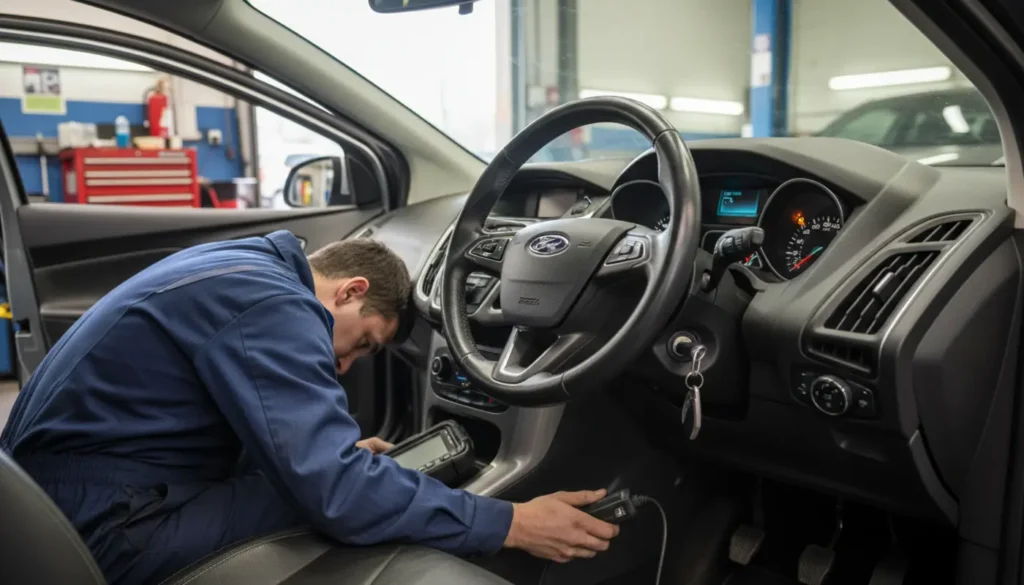
A diagnostic scan reads stored fault information from the vehicle's onboard diagnostic system. Modern cars monitor many systems and may store a Diagnostic Trouble Code, often shortened to DTC, when a fault is detected. These codes are useful, but they are not magic. A scan is the start of diagnosis, not the finish line.
For example, a code may point towards an oxygen sensor reading, a misfire condition or an emissions system fault. That does not automatically mean the named sensor is faulty. The real cause could be damaged wiring, an air leak, low fuel pressure, a failing coil, poor compression or another issue affecting the reading. Replacing parts based only on a code can become an expensive guessing game.
If you want to understand the process before visiting a garage, the Motor Fix Way guide on how to check engine light codes explains how fault codes are read and why interpretation matters.
The same dashboard light can be triggered by many different fault categories, which is why diagnosis matters. Some are relatively straightforward, while others need specialist testing.
Symptoms can help guide the inspection, but they rarely prove the exact cause alone. A car that feels sluggish could have a turbo boost issue, a fuel problem, an emissions restriction or something else entirely. A proper technician will usually combine fault codes with live data, visual checks and mechanical testing where needed.
For applicable vehicles, an engine malfunction indicator lamp that shows a fault or does not operate correctly can be recorded as a major defect during an MOT inspection. The detailed rules depend on vehicle type, fuel type and date of first use, so it is best not to rely on general pub car park wisdom.
The DVSA MOT inspection manual explains how the malfunction indicator lamp and emissions equipment are assessed for cars and light vehicles. You can check the official guidance here: DVSA MOT inspection manual on emissions and warning lamps.
Do not simply clear the light just before an MOT and hope for the best. If the underlying fault remains, the warning may return and readiness checks may not be complete. More importantly, the vehicle may still have an emissions or running fault that needs attention.
No, not usually. A check engine light can be caused by many repairable faults, including sensors, wiring, ignition components, fuelling issues, emissions equipment or software-related concerns. A replacement engine should not be considered just because a warning light has appeared.
Replacement only becomes relevant when diagnosis confirms serious internal damage or when repair is not technically or economically sensible. Examples might include severe overheating damage, failed compression, timing failure damage, lubrication-related internal wear or another major mechanical fault. Even then, the decision should be based on the vehicle's value, condition, repair cost, parts availability and the quality of replacement options.
A replacement engine will not automatically fix a wiring fault, ECU issue, blocked emissions component or gearbox-related problem. If the original cause is still present, the warning light may return after the new unit is fitted. That is why a written diagnosis is so important before spending money on major parts.
If a replacement engine is being considered, compatibility is critical. Matching only the make, model and engine size is not enough. Many vehicles use different engine codes, power outputs, ancillaries, ECU arrangements and emissions equipment across different years and trims.
Suppliers may need the registration number, VIN, exact engine code, fuel type, year, gearbox type, drive layout and vehicle variant before confirming a match. If you are unsure where to start, the Motor Fix Way article on finding your car's engine code explains why this information matters when sourcing compatible parts.
Used and reconditioned engines should also be compared carefully. A used engine is normally a previously fitted unit removed from another vehicle, so mileage evidence, donor vehicle information, inspection and warranty terms matter. A reconditioned engine has been refurbished to the supplier's stated process, but the level of work can vary. Always ask what has been replaced, tested and included.
Quotes can also differ widely in what they cover. A supply-only engine price is not the same as a supply-and-fit quotation. Fitting may involve removal, installation, fluids, filters, seals, belts, programming, diagnostics, delivery, recovery and disposal. Warranty terms can also depend on who fits the engine and whether fitting instructions are followed.
Before approving a repair or replacement, ask clear questions and get the answers in writing where possible. This protects you and helps the garage or supplier avoid misunderstandings.
Good questions do not make you difficult. They make you informed. A reputable professional should be willing to explain the diagnosis and the reasoning behind the recommendation in plain English.
Once the repair is completed, the technician should clear the fault codes and verify that the issue has been resolved. Depending on the vehicle, this may involve a road test, live data check or confirmation that the system's readiness monitors have completed. If the light comes back, the fault needs further investigation rather than another quick reset.
Keep invoices, diagnostic reports and details of any parts fitted. These records can help with future diagnosis, warranty claims and MOT preparation. Regular servicing, correct oil specification and prompt attention to unusual noises, smells or warning lights all help reduce the risk of small faults becoming big ones.
Is the check engine light the same as the engine management light?
In everyday UK use, yes, the terms are often used for the same malfunction warning. The exact symbol and system coverage can vary by manufacturer, so check your handbook.
Can I drive if the check engine light is amber and steady?
You may be able to drive carefully to a nearby garage if there are no other symptoms, but do not ignore it. Stop sooner if performance changes, another warning appears or the car feels unsafe.
What should I do if the check engine light is flashing?
Treat a flashing light as urgent, especially with shaking, misfiring, smoke or loss of power. Stop safely and arrange professional or breakdown assistance.
Will disconnecting the battery fix the warning light?
No. It may temporarily clear information or change the warning state, but it does not repair the cause and can make diagnosis harder.
Does the light mean my engine needs replacing?
Usually not. Replacement should only be considered after proper diagnosis confirms serious mechanical damage or another justified reason that makes repair impractical.